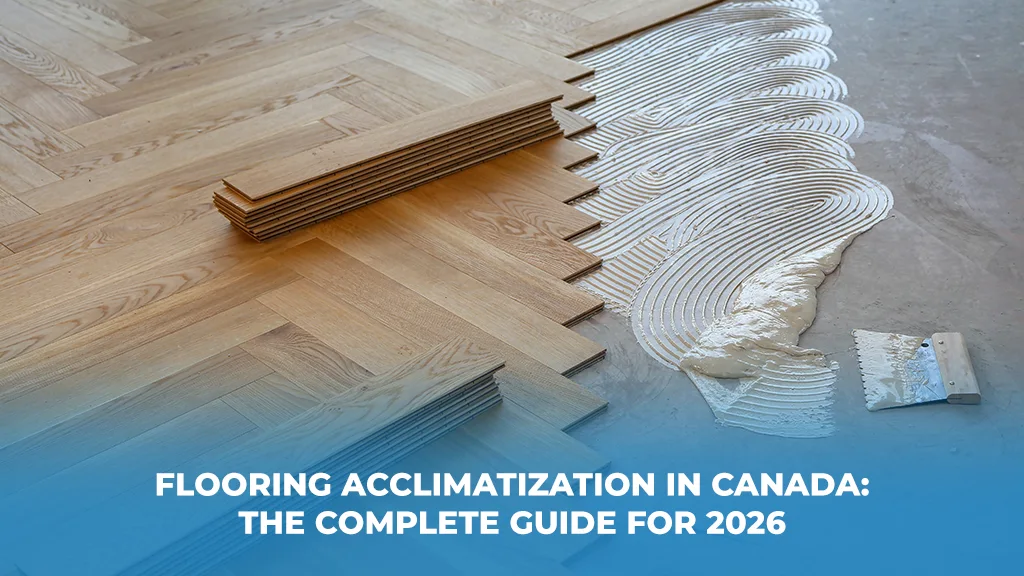
Every experienced installer will tell you the same thing: the fastest way to ruin a beautiful new floor is to install it the day it arrives. Flooring acclimatization in Canada is not an optional extra, it is the step that protects your floor against this country's extreme seasonal swings. At Petun Flooring in the Kitchener-Waterloo region, here is everything you need to know to get it right.
DefinitionWhat Is Flooring Acclimatization?
Flooring acclimatization is the process of storing new flooring inside the installation room so the material adjusts to the room's normal temperature and relative humidity before it is laid. Flooring materials naturally expand and contract with moisture and heat, so acclimating them prevents the dimensional changes that cause gaps and buckling after installation.
Why Materials Expand and Contract
Wood-based floors absorb and release moisture from the air, swelling when humidity rises and shrinking when it falls. Even synthetic floors react to heat. If a floor is installed before it stabilizes, it will keep moving afterward, and that movement is what pushes planks apart or lifts them.
Why Canada's Climate Makes It Critical
Canadian homes experience some of the widest indoor swings anywhere: bone-dry air from winter heating, then high humidity in summer. This is exactly why flooring acclimatization in Canada matters more here than in milder climates. A floor that is not acclimated to these conditions is far more likely to fail.
DataHow Long Does Each Floor Type Need?
Flooring acclimatization in Canada varies by material and manufacturer, but here is the general guidance for Canadian homes.
| Flooring type | Typical acclimatization time | Notes |
|---|---|---|
| Solid hardwood | 3 to 7 days (sometimes more) | Most sensitive to humidity; longest acclimation |
| Engineered hardwood | 48 to 72 hours | More stable than solid, still needs time |
| Laminate | 48 hours | Fibreboard core reacts to moisture |
| Vinyl / luxury vinyl plank (SPC) | 24 to 48 hours | Rigid core is stable but still adjusts to temperature |
| Tile (porcelain / ceramic) | Not required | Does not expand or contract with humidity |
These times are a guide; the manufacturer's instructions always take priority. Large, open areas and humid regions call for longer acclimatization.
ConditionsIdeal Conditions for Acclimatization
Temperature and Humidity Targets
Aim for the room's normal, year-round living conditions: roughly 18 to 24 degrees C and 35 to 55% relative humidity. The goal is not a special environment, but the everyday conditions the floor will actually live in once installed.
How to Store the Material
Store boxes flat and unopened or loosely opened inside the installation room, not in a garage, basement staging area, or truck. Keep them off cold concrete and away from exterior doors, vents, and direct sunlight. Air should be able to circulate around the stacks.
Get the Room Ready First
The room itself must be at normal living conditions during acclimatization, which means the home's heating or cooling should be running. For a new build or renovation, the HVAC system needs to be operational so the space reflects real living conditions.
Watch-outsWhat Happens If You Skip Acclimatization?
Skipping this step is the most common cause of flooring failure. As the material adjusts after installation, it moves, and that movement shows up as gapping between planks, buckling or peaking where boards lift, cupping on hardwood, and popped seams on laminate. Most of these failures are not covered by warranty, because the manufacturer's instructions were not followed.
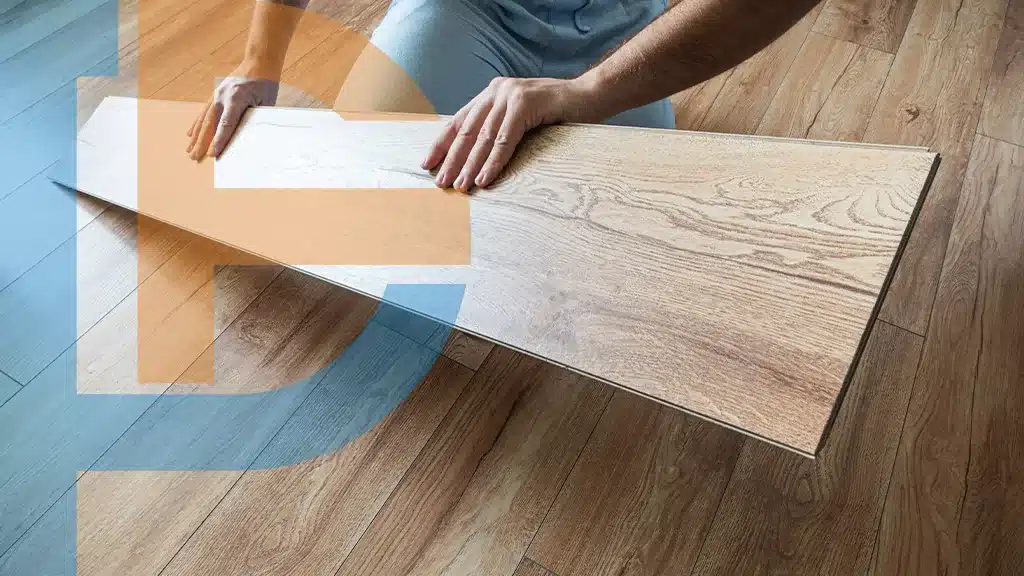
By materialAcclimatization by Floor Type
Hardwood: The Most Demanding
Solid hardwood needs the longest acclimatization and the most careful humidity control, because natural wood moves the most. The choice between solid and engineered also affects stability, which we cover in our comparison of engineered versus solid wood.
Laminate and Vinyl: Faster but Still Needed
Laminate needs about 48 hours because its fibreboard core reacts to moisture, while rigid-core vinyl is the most stable but still benefits from adjusting to room temperature. The core type matters here, which is why it helps to understand SPC vs WPC vinyl flooring before you buy.
Match Durability to the Room Too
While you plan acclimatization, plan durability as well: the right wear layer or AC rating for the traffic in each room. Our guide to wear layer and AC rating explains those numbers.
AnswersFrequently Asked Questions
How long does flooring acclimatization in Canada take?
Most floors need 24 to 72 hours. In Canada, acclimate solid hardwood for 3 to 7 days, engineered hardwood and laminate for about 48 hours, and vinyl for 24 to 48 hours, always following the manufacturer's guidance. Wider rooms and humid regions may need longer.
Do I need to acclimate vinyl plank flooring?
Yes, usually 24 to 48 hours. Although rigid-core vinyl is dimensionally stable and does not absorb moisture like wood, it still expands and contracts slightly with temperature, so acclimating it to the room prevents gaps at the seams.
What temperature and humidity are best for acclimatization?
Aim for the room's normal living conditions, about 18 to 24 degrees C and 35 to 55% relative humidity. The home's heating or cooling should be running so the space reflects the real conditions the floor will experience after installation.
What happens if I do not acclimate my flooring?
The floor keeps adjusting after installation, which causes gapping, buckling, cupping, or popped seams. These failures are common and are usually not covered by warranty, because acclimatization is part of the manufacturer's required installation instructions.
Does tile need to be acclimated?
No. Porcelain and ceramic tile do not expand or contract with humidity, so they do not need acclimatization. The subfloor still needs to be properly prepared, but the tile itself can be installed without a waiting period.
Want your flooring acclimatization in Canada done right?
Let the Petun Flooring team in Kitchener-Waterloo handle supply and professional installation, so acclimatization, subfloor prep, and moisture testing are all managed for you. Getting flooring acclimatization in Canada right is the difference between a floor that lasts and one that fails.