Description
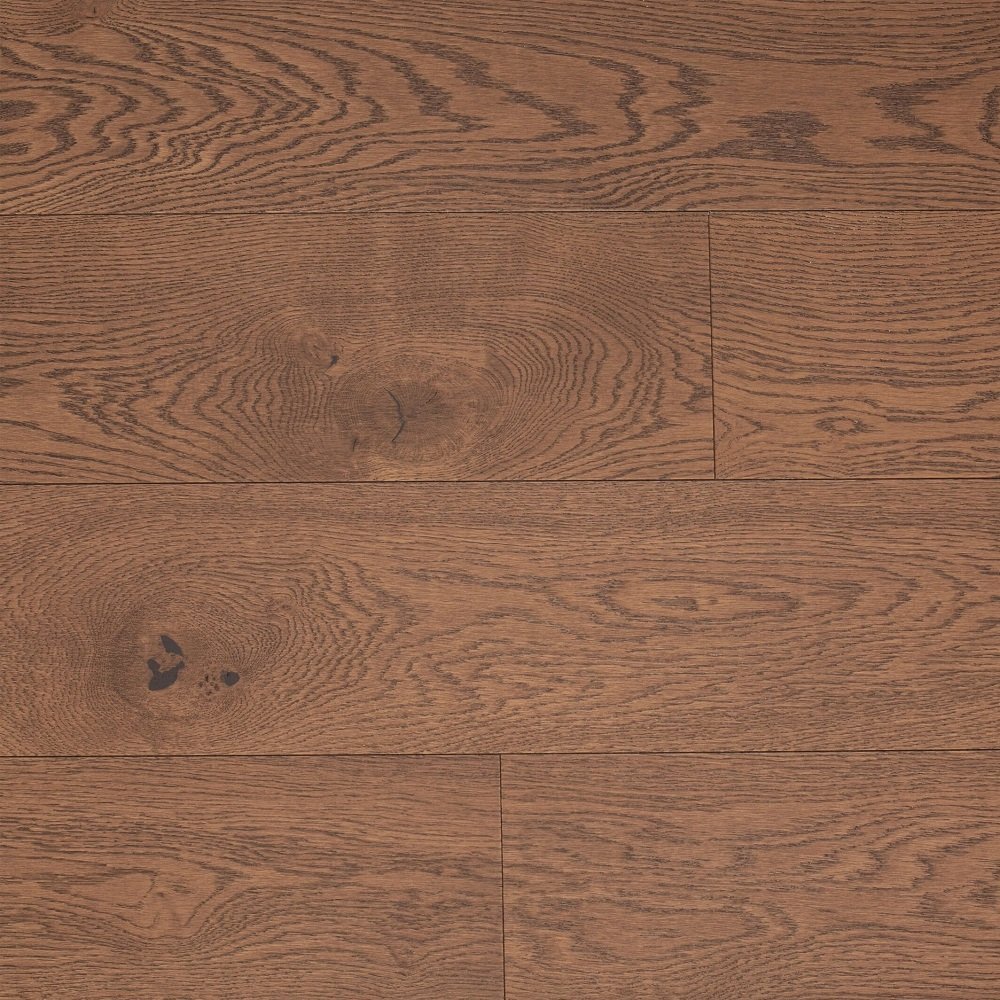
Bronze Engineered White Oak 7.5: How Random Length Flooring Earns Its Natural Look
Hold two finished floors up against each other and you will usually sense which one was laid thoughtfully, even if you cannot say why. The difference is rarely the timber. It is the pattern the end joints make, and whether the eye finds a repetition it was not supposed to notice. Bronze arrives in random lengths precisely so that pattern can be made to disappear.
Why uniform boards give the game away
A floor made entirely of identical lengths produces regular steps across the room, and the brain is very good at spotting regularity. Once you have seen the staircase of joints marching diagonally across a living room, you cannot unsee it. Random length flooring removes the possibility. With boards arriving in a range of lengths, the installer can distribute joints unevenly, which is how a real timber floor has always looked.
There is a second benefit. Random lengths let a fitter use material efficiently, because an offcut from the end of one row has a reasonable chance of starting the next instead of going into the bin. On a floor of any size, that affects how much you need to buy.
How a fitter staggers the joints
Good hardwood installation begins with the boards out of the cartons and sorted. A fitter will open several boxes at once, lay the contents out and work from the whole spread rather than taking boards in the order they come, which keeps lengths and natural variation mixed across the room instead of clustered in one corner.
The working rule is that end joints in adjacent rows should be well offset from one another, typically by a generous margin rather than the minimum, and that the same offset should not recur in the next row along. Short boards are spread out rather than used up together, and the first board of each row is chosen to break the rhythm of the one before. Done properly it looks accidental, which is the whole point, and it is a skill rather than a procedure.
Planning before the first row
In any hardwood installation the layout is decided on paper and with a chalk line, not halfway through. Direction comes first, usually along the longest run or towards the main window. Then the room is measured to see what the final row will be, and the starting line is adjusted so you are not left finishing against the most visible wall with a narrow strip. Doorways, hearths and thresholds are marked, and board lengths are planned so a joint does not fall awkwardly in a doorway where everyone will see it.
Construction and what to confirm with us
Bronze is genuine engineered oak, a real white oak surface layer bonded over a multi layer core, a build that holds its shape through an Ontario summer and the dry months that follow far better than a solid board of equal width. Boards are 7.5 inches wide by 3/4 inch thick, each carton covers 19.73 square feet and weighs about 50 lbs, and a pallet carries 986.5 square feet. The right installation method depends on your subfloor and the storey involved, so agree it with our team rather than assuming. Professional installation is strongly recommended, and the material should acclimatise in the room before work begins. Please confirm the specification, the suitability of the rooms and your quantities with the Petun Flooring team before ordering.
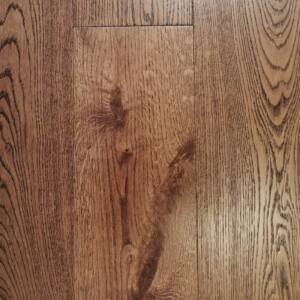
The photograph shows you the board, though not the way engineered oak of mixed lengths settles into a finished room, so ask to see a sample and let us talk you through the set out. Bronze is available for pickup in Kitchener and Cambridge, inventory is limited, and bringing your measurements lets us calculate quantities with an honest allowance for cuts while you are in the showroom.
Specifications
Colour: Bronze
Size: 7.5”x3/4”xRL 190.5x19xRLMM
Box: 19.73 Sq. ft./ctn
Weight: 50 lbs./ctn
Pallet: 986.5 sq.ft/pallet