Description
Rye Engineered White Oak 7.5: Engineered Hardwood Built for a Climate That Moves
Wood is a material that was alive, and it never entirely forgets it. It takes on moisture in July and gives it up again in February, and it changes shape very slightly as it does so. Ontario asks a floor to do that twice a year, every year. Rye is specified the way it is because of exactly that, and the construction is worth understanding before you choose anything else.
What is actually under the surface
Engineered hardwood is not a substitute for timber. It is timber, arranged more intelligently. A genuine hardwood surface layer, white oak in this case, is bonded over a multi layer core, with the layers of that core running in alternating directions. Each layer wants to move, and each one is restrained by the layer beneath it pulling the other way. The result is a board that holds its geometry when the humidity shifts.
A solid board has no such internal argument. All of it moves in the same direction at once, which is why a solid floor is more prone to cupping across its width in a wet season and to opening gaps between boards once the furnace has been running for a month. Rye is 7.5 inches wide by 3/4 inch thick in random lengths, and at that width the stability of an engineered build matters considerably more than it would on a narrow strip floor.
A humid August and a dry January
Between a muggy summer week and the middle of a heating season, indoor relative humidity in a local home can swing dramatically. Engineered wood flooring copes with that better than most people expect, but it is not indifferent to it. Running a humidifier through the coldest months and keeping the house within a sensible humidity band is the single most useful thing an owner can do for a wood floor, and it is good for the woodwork, the doors and the occupants as well.
The other half of the equation is preparation. The boards should come into the room and acclimatise there, in the conditions they will have to live with, before anything is fastened or laid. Skipping that step has caused more disappointment than any product fault ever has.
Living with a genuine wood surface
A real wood floor rewards a light touch. Sweep or vacuum with a hard floor head to lift grit, which is what actually abrades a surface, and clean with a barely damp mop and a cleaner intended for wood. Never flood it, never steam it, and deal with spills promptly rather than leaving them to sit. Felt pads under furniture, a mat at each door and trimmed claws on the dog will do more for a real wood floor over five years than anything else.
Fitting and checking the specification
Each carton of Rye covers 19.73 square feet and weighs about 50 lbs, and a pallet holds 986.5 square feet. Installation method for engineered wood flooring depends on the subfloor, the storey and the room, so the approach should be agreed with our team rather than assumed. We strongly recommend professional installation, since moisture testing, subfloor flatness, expansion allowance and the layout of random lengths are all judgement calls an experienced fitter makes quickly and a first timer often gets wrong. Confirm the specification, the suitability of the room and your quantities with the Petun Flooring team before you commit.
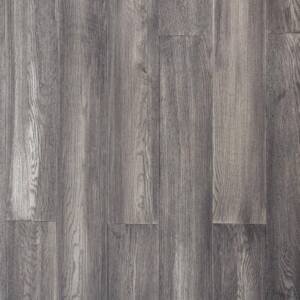
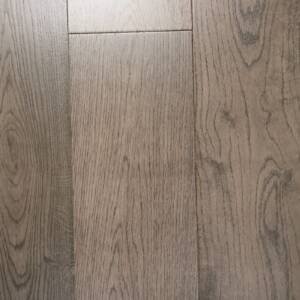
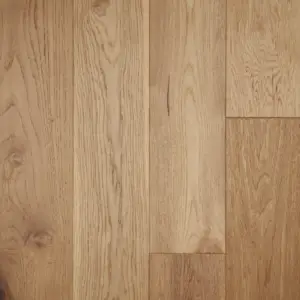
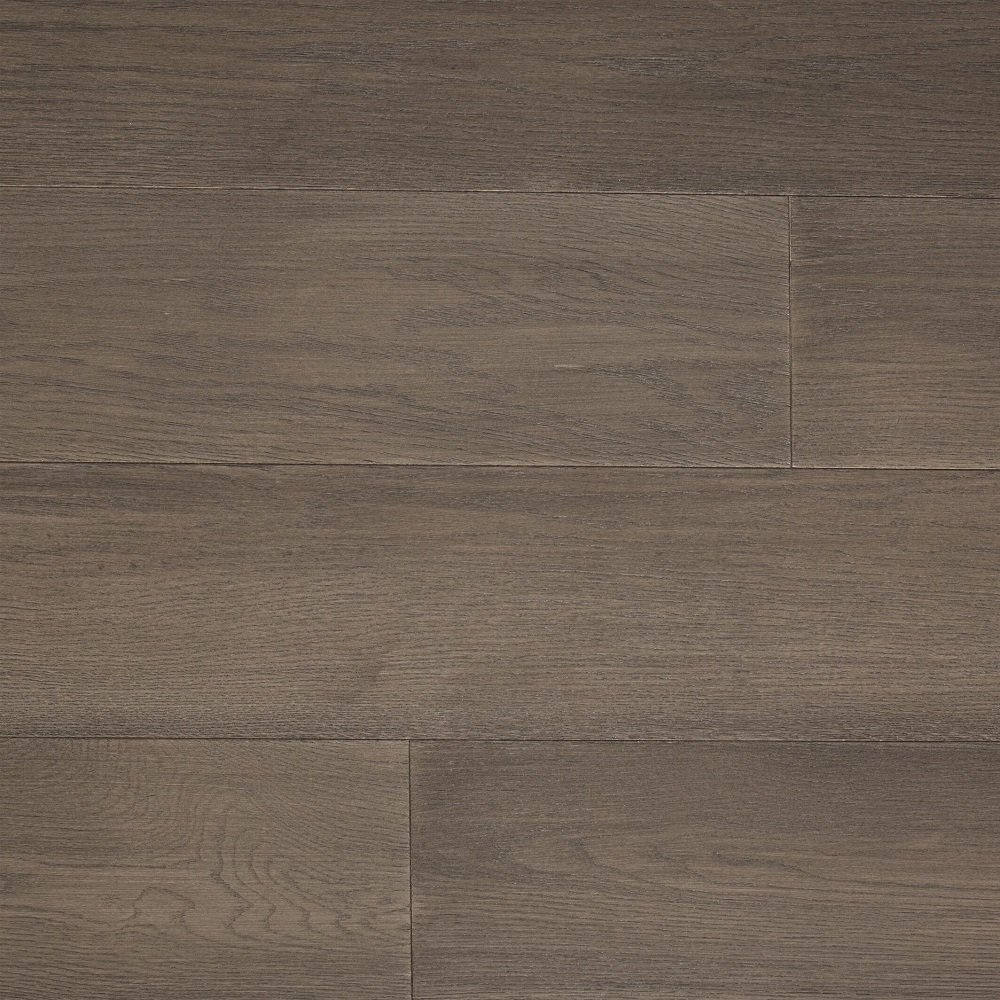
Spend a moment with the product photograph, then arrange to see a board in daylight here, because the way oak reads in a finished room is something no screen reproduces. Rye is available for collection in Kitchener and Cambridge, quantities are limited, and arriving with your measurements means we can settle cartons and waste allowance in one conversation.
Specifications
Colour: Rye
Size: 7.5”x3/4”xRL 190.5x19xRLMM
Box: 19.73 Sq. ft./ctn
Weight: 50 lbs./ctn
Pallet: 986.5 sq.ft/pallet