

Quick answer: Forced air heating dries indoor air, and hardwood loses moisture with it. Boards shrink, seams open and the floor can creak or check. Keep indoor humidity between 35% and 55% where your windows allow, add a furnace or room humidifier, keep heat registers clear of rugs and furniture, and never fill seasonal gaps in winter.
Most Ontario homes heat with a gas furnace and ductwork. It is efficient, but it pushes warm, dry air across your floors for five or six months a year. Hardwood is hygroscopic: it trades moisture with the air around it. When relative humidity falls into the teens or low twenties in January, solid oak, maple and hickory give up moisture and shrink. This guide explains what forced air does to hardwood, the humidity numbers to aim for, and the simple settings and habits that protect your floor every winter.
What Forced Air Heating Does to Hardwood Floors
- Shrinkage and gaps: each board narrows slightly as it dries, so thin lines open between planks, usually widest in mid-winter.
- Creaks and squeaks: drier boards move against each other and the fasteners, so the floor gets noisier.
- Checking and splits: very dry air can open small cracks along the grain, most often on wide plank solid wood and in rooms right above the furnace.
- Hot spots near registers: boards right beside a floor vent dry faster than the rest of the room and can gap or discolour first.
- Finish stress: repeated shrink-and-swell cycles can show as hairline breaks in the finish along the edges of boards.
These changes are mostly seasonal. When spring humidity returns, the wood takes moisture back and most gaps close on their own.
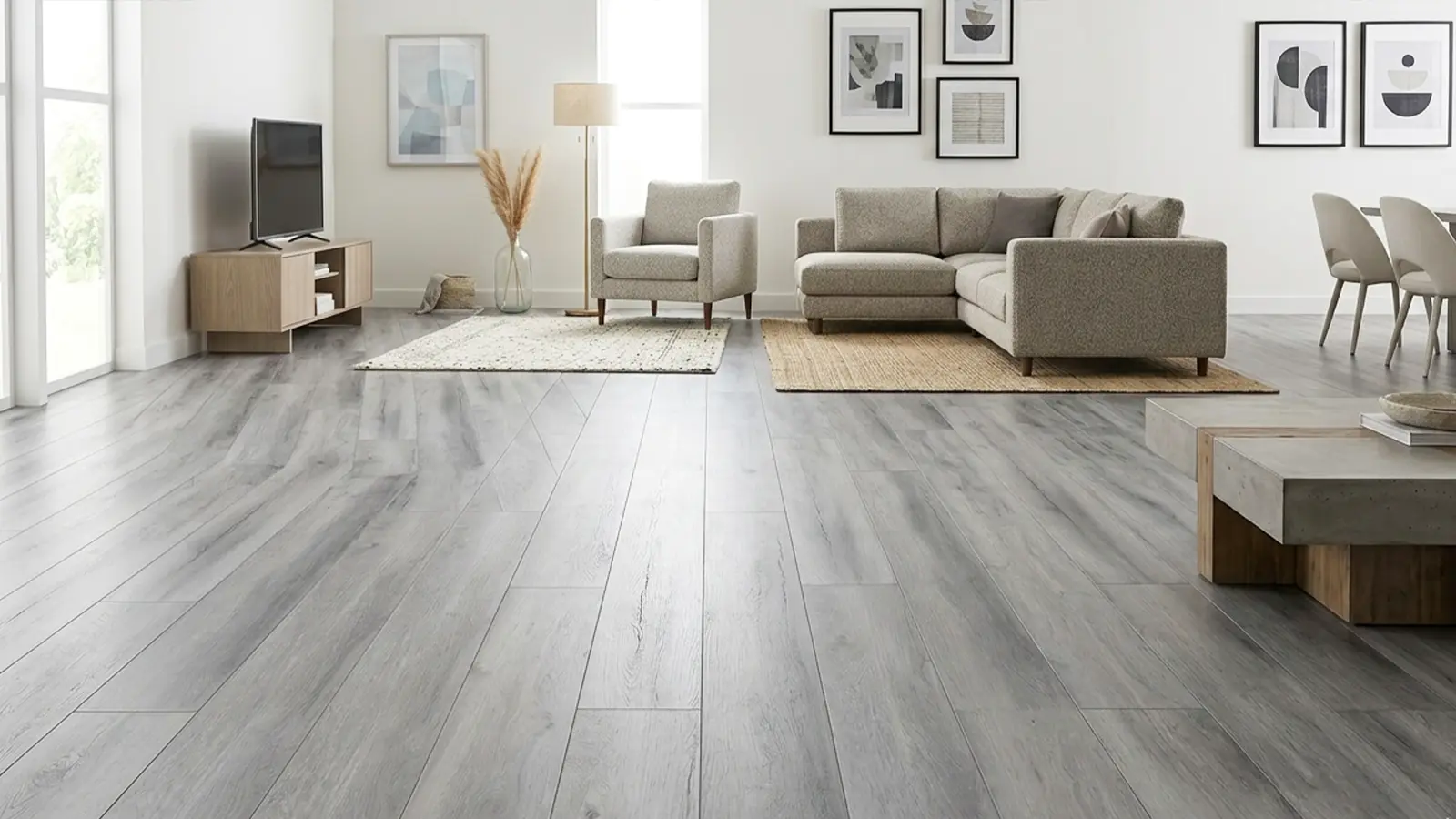
Ideal Humidity for Hardwood Floors in Winter
Most hardwood manufacturers and the flooring industry recommend keeping indoor relative humidity between 35% and 55% and the temperature at a steady 18 to 24°C. In a Canadian winter, though, holding 45% indoors can cause condensation on windows. The practical approach is to keep humidity as high as your windows allow and adjust it as the outdoor temperature drops:
| Outdoor temperature | Suggested maximum indoor humidity |
|---|---|
| Above 4°C | 45% |
| −1°C to 4°C | 40% |
| −7°C to −1°C | 35% |
| −12°C to −7°C | 30% |
| −18°C to −12°C | 25% |
| Below −18°C | 20% to 25% |
If your windows fog or frost at the bottom corners, lower the setting a little. If your floor is gapping badly and the windows are dry, raise it. A $20 digital hygrometer in the main living area tells you what is really going on.
Furnace Humidifier Settings and Other Fixes
Whole-home (furnace) humidifier
A bypass or steam humidifier mounted on the furnace adds moisture to every room the ducts reach. It is the most effective fix for homes with a lot of hardwood. Change the water panel each fall, open the bypass damper for winter and set the humidistat using the chart above.
Portable humidifiers
No furnace humidifier? Run a large console humidifier in the rooms with the most hardwood. Use distilled water or clean it often to avoid white dust and bacteria.
Heat registers and returns
- Keep rugs, furniture and curtains off floor registers so hot air does not concentrate on one patch of floor.
- Use flush-mount wood vent covers that match your flooring instead of metal registers that sit on top of the boards.
- Partly close registers in rooms that run hot rather than letting the floor bake.
Thermostat habits
Big temperature swings speed up drying. A steady setting with modest night setbacks is easier on wood than letting the house cool down a lot and then blasting the furnace.
Winter Gaps: When to Wait and When to Call a Pro
Gaps about the thickness of a business card that appear in winter and close in summer are normal for solid hardwood in Canada. Do not fill them with wood filler in winter; when the boards expand again in summer, the filler gets crushed and can damage the edges.
Call a flooring professional if gaps stay open after a full humid season, if boards cup (edges higher than the centre) or crown, if the finish is splitting, or if gaps appear in only one area, which can point to a duct, leak or subfloor problem.
Choosing a Floor That Handles Forced Air Better
Planning a new floor? Engineered hardwood is built from cross-layered plies, so it moves far less than solid wood when the furnace runs. Narrower boards also show smaller gaps than wide planks. If you want the wood look with almost no seasonal movement, rigid core vinyl plank is another option. Our engineered vs solid hardwood guide compares both for Canadian homes, and our flooring acclimation guide explains how to install new wood so it starts at the right moisture level.
If you are adding in-floor heat, read our radiant floor heating guide first: radiant systems dry the air less than forced air, but not every wood floor is rated for them.
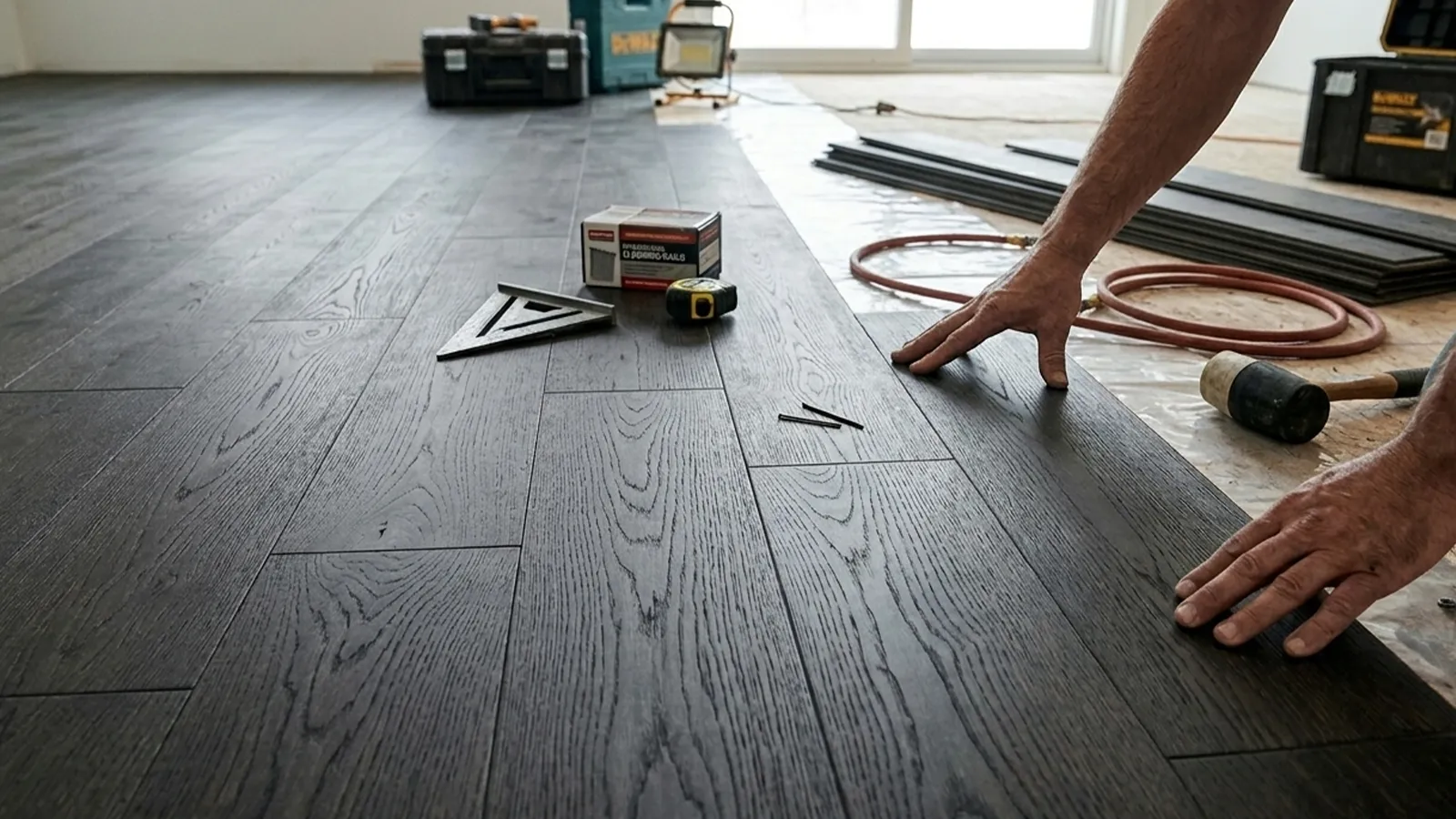
Winter Hardwood Care Checklist
- Check the hygrometer weekly and adjust the humidifier to the outdoor temperature.
- Keep registers clear and use flush wood vent covers.
- Put walk-off mats at every entry and wipe up salt and slush right away.
- Clean with a dry or barely damp microfibre mop and a wood-safe, pH-neutral cleaner.
- Add felt pads under chairs and tables; dry wood dents and scratches more easily.
- Book a professional check if gaps, cupping or finish cracks do not settle by summer.
Hardwood Help in Kitchener-Waterloo
Petun Flooring supplies and installs solid and engineered hardwood across Kitchener, Waterloo, Cambridge and Guelph. Our team can recommend a floor that suits your home’s heating, check problem areas and handle professional hardwood flooring installation. Not sure whether to refinish or replace a dried-out floor? See refinish or replace or book a free in-home estimate.
Forced Air Heating and Hardwood FAQ
Does forced air heating damage hardwood floors?
Forced air heating does not damage hardwood by itself, but it lowers indoor humidity. Without a humidifier, solid hardwood shrinks, gaps, creaks and can crack. Keeping humidity between 35% and 55% where possible prevents most problems.
What humidity should I keep my house at for hardwood floors in winter?
Aim for 35% to 55% relative humidity. In very cold weather, lower it to around 25% to 35% if windows start to fog, and use a hygrometer to check the real level.
Is it normal for hardwood floors to gap in winter?
Yes. Small gaps that appear during heating season and close in spring are normal seasonal movement for solid hardwood in Canadian homes.
Can I put a rug over a floor heat register?
No. Covering a register traps hot air against the floor and can over-dry or discolour the wood around it. Keep registers clear and use flush-mount wood vent covers.
Is engineered hardwood better with forced air heating?
Yes. Engineered hardwood has cross-layered plies that resist shrinking and swelling, so it shows far fewer gaps and cracks than solid hardwood in homes heated by a furnace.
