Description
Casing Colonial: A Clear Starting Point for Door Casing and Window Trim
The first time you trim an opening, the job tends to look more mysterious than it really is. Colonial casing is a sensible place to begin, because the profile is familiar, forgiving and widely used across Waterloo Region homes. This primed interior moulding measures 2-3/4 inches wide by 1/2 inch thick in 7 foot lengths.
What casing actually does around an opening
When a door or window is set, the jamb sits inside a rough opening and the drywall is brought up to meet it. That meeting point is never perfectly neat. Casing is the moulding that covers it, concealing the gap between the jamb and the wall and giving the opening a defined edge rather than a raw joint. It does quiet practical work as well. The trim holds the drywall edge in place, absorbs the small seasonal movement between materials, and protects a vulnerable corner from knocks. Houses here shift slightly through humid summers and dry winters, and a well fitted run of door casing lets that happen without a visible crack appearing.
Reading a colonial profile
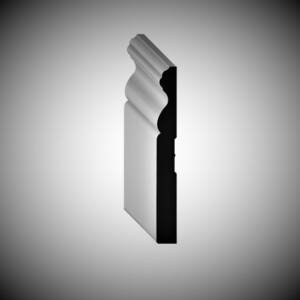
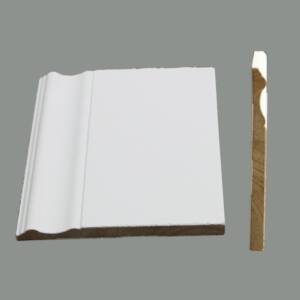
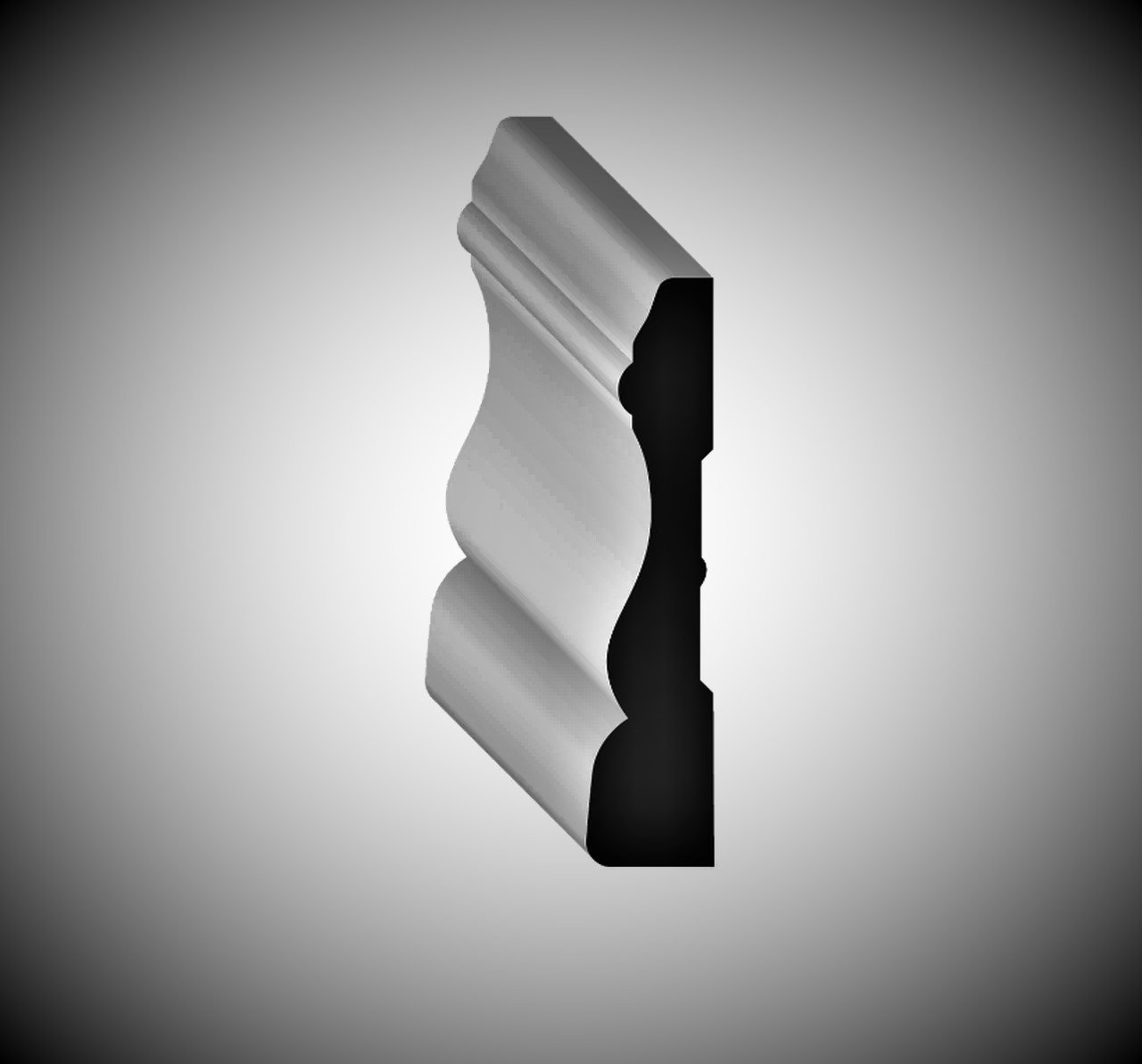
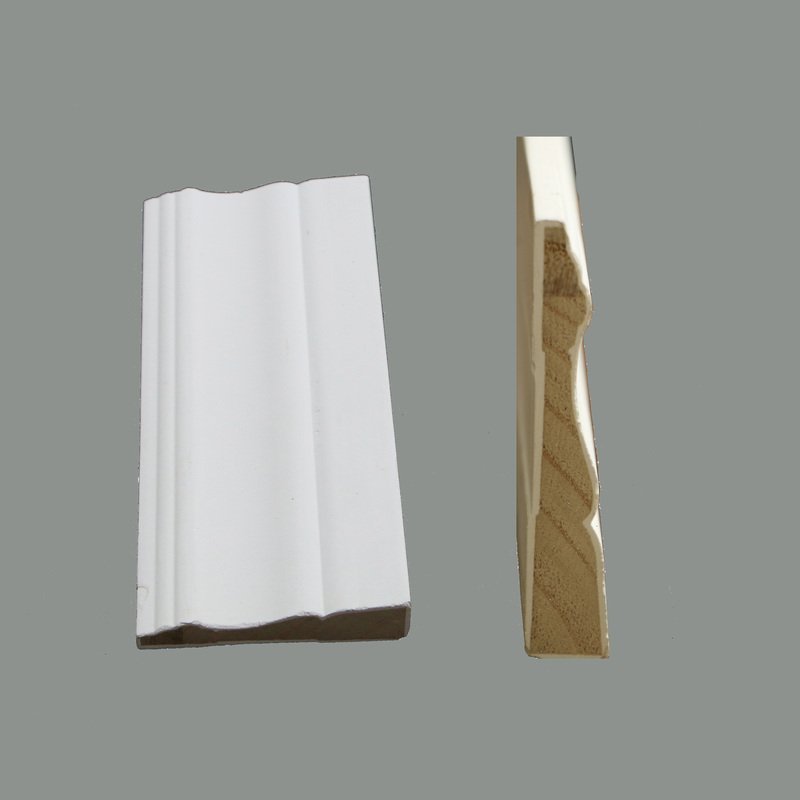
Colonial casing carries a gently stepped and curved face rather than a flat one. The shape rises from a thin edge near the jamb to its fullest point, then eases back toward the wall. That contour is what gives the moulding its traditional character and the reason it sits comfortably beside panel doors and painted baseboard. Because the profile runs the same way along its whole length, one moulding serves as door casing downstairs and as window trim upstairs. Using a single profile throughout is the simplest way to make a house read as one considered whole.
Why a seven foot length suits standard jambs
A standard interior door in a Canadian home stands 80 inches tall. Add the head jamb above it and the reveal of roughly a quarter inch that is normally left along the jamb edge, and each vertical leg needs to be a little over six foot nine before the mitre is cut. Seven feet gives you that length with a modest allowance for squaring the end and trimming the angle, which is why this size is stocked the way it is. The head piece across the top of the opening comes out of separate stock, so plan two legs and one head for every door, and four pieces for window trim where the opening is cased on all sides.
Planning your first order
- Count openings first, then decide which are cased on three sides and which on four
- Allow extra length for practice cuts, since mitres rarely come right on the first attempt
- Mark your quarter inch reveal on the jamb before cutting anything
- These mouldings are primed, and are normally painted after installation
Before you reach for the mitre saw
We recommend professional installation. Corners that meet cleanly, reveals that stay even and joints that survive the first winter come from experience rather than luck. Please confirm the profile, the material and the quantities you need with the Petun Flooring team before ordering, particularly if you are matching existing trim in an older house. Look closely at the product photograph, and better still, come and hold a length in daylight, because screens and showroom lighting never tell the whole story about a moulding. Casing Colonial can be picked up in Kitchener and Cambridge, and inventory on trim lines is limited, so it is worth checking availability before you set a date. Bring your measurements to 107 Manitou Drive, Unit 13, and we will help you work out piece counts, offcuts, shipping or financing if the project calls for it. SIZE: 2-3/4″x7’x1/2″