

Description
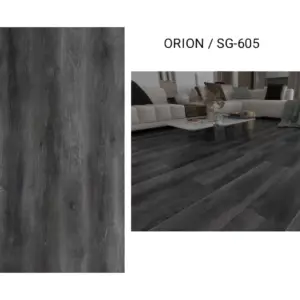
Crater Floorway: Basement Flooring Built for Life Below Grade
The basement is often the last space a household finishes, and it is usually the one that causes the most hesitation. Crater from the Floorway range was made with that room in mind, pairing a composed wood look surface with the kind of stability a lower level asks for. Choosing basement flooring has far less to do with fashion than with understanding what sits beneath it.
Why Lower Levels Defeat Solid Wood and Laminate
Solid hardwood is a natural material, and it answers to the air around it. In a below grade room it takes on moisture along the edges of each board, then gives it back when the heating comes on, and after a few seasons that cycle shows itself as cupping, as gaps that open along a seam, or as a squeak that was not there the year before. Traditional laminate fails in a different way. Its core is wood based, so when water reaches a joint the edges swell and stay swollen, and no amount of drying returns the plank to the shape it started with.
Neither product is badly made. Both are simply designed for rooms that sit above the ground, where the air is steadier and more predictable. A basement is a different environment, and it deserves a floor selected for the conditions it actually has rather than one borrowed from the storey above.
What a Concrete Slab Does Through an Ontario Year
A slab sits in direct contact with the ground, and ground moisture travels upward through concrete as vapour whether or not anything is visible at the surface. Through a humid Waterloo Region summer, warm air drifts down the stairs, meets a cool slab and releases its moisture there. Through a dry winter, forced air heating reverses the whole arrangement and draws moisture out of anything prepared to release it. A floor laid on that slab lives with both extremes every single year, which is why vapour behaviour deserves more weight in a basement than almost any other factor.
Where a Rigid Plank Fits Into the Picture
Vinyl plank is built as a printed decorative layer over a dense core, with a protective wear surface on top. Rigid core vinyl of this sort does not depend on timber for its strength, so it takes much less interest in the moisture moving around it. That is the reason rigid core vinyl has become the standard answer for a finished basement, and the reason moisture resistant flooring is the phrase installers reach for when they describe the category. Crater is water resistant rather than waterproof, and moisture resistant flooring of this type still expects a dry and sound subfloor underneath.
Test the Room Before You Choose the Floor
- Arrange a proper moisture test on the slab rather than judging it by touch
- Have the subfloor assessed for flatness, cracks and old adhesive residue
- Confirm that any grading or drainage issue outside has been resolved first
- Plan how the floor will meet the stairs, the posts and the mechanical room
Fitting, and Getting the Details Confirmed
Many rigid vinyl planks click together and float over a prepared subfloor, though the exact method varies by product, and a lower level often calls for particular care around the perimeter. Please confirm the specification, the installation method, the room suitability and the quantities with the Petun Flooring team before you order, and do consider professional installation so that the preparation is done properly the first time.
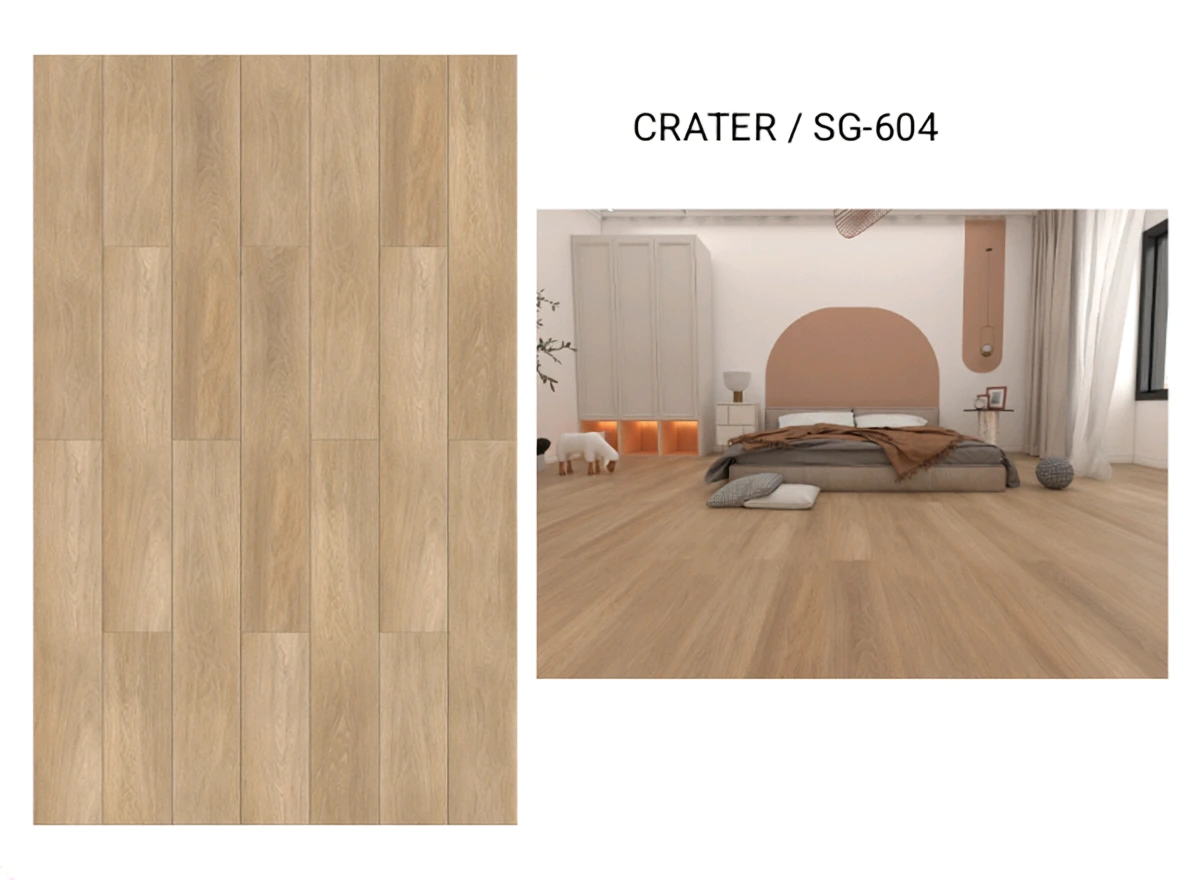
Look closely at the product photograph, and better still, come and hold a sample under your own light fittings, because a screen can only hint at how a surface reads in a finished room. Crater is available for pickup in Kitchener and Cambridge, inventory is limited, and bringing your measurements with you lets us work through quantities together while you are in the showroom.
Reviews
There are no reviews yet.