
0 items
-
$ 0.00
0

Click-lock, glue-down or loose-lay? SPC or WPC? Wood-look or tile-look? This guide explains how luxury vinyl plank (LVP) is built, which installation system suits which room, and what to compare before you buy for a Canadian home.
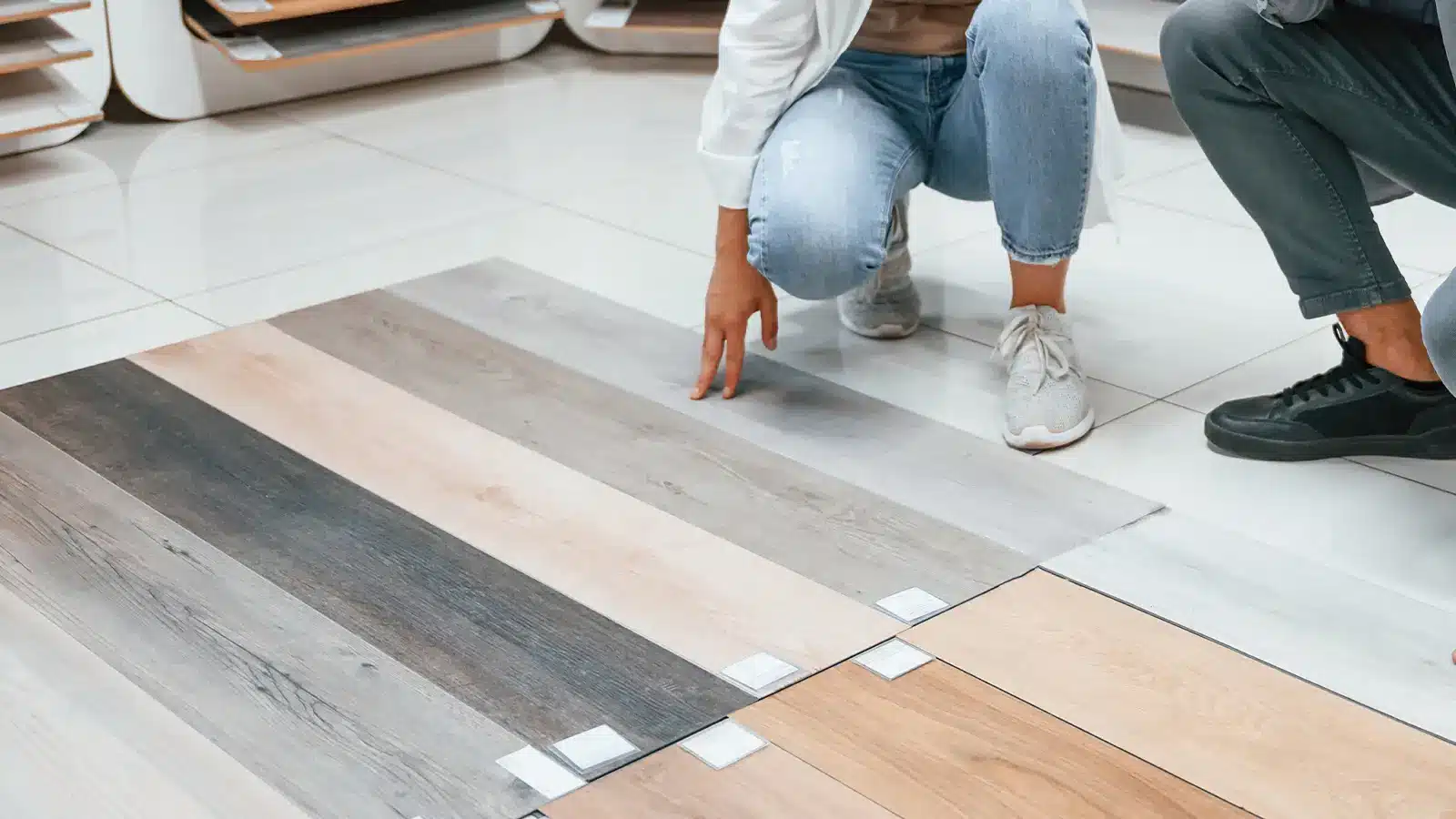
For most Canadian homes, a rigid core (SPC) click-lock vinyl plank with a 12 to 20 mil wear layer and a suitable underlay is the best all-round choice. It is waterproof, stable through winter heating and summer humidity, and quick to install over most flat subfloors. Choose glue-down vinyl for commercial spaces, rolling loads and very sunny rooms, and loose-lay vinyl when you want planks that can be lifted and replaced easily.
| Click-lock (floating) | Glue-down (dry back) | Loose-lay | |
|---|---|---|---|
| How it stays down | Planks lock edge to edge and float over underlay | Fully bonded to the subfloor with adhesive | Heavy friction-grip backing, perimeter glue in large rooms |
| Typical thickness | 4 to 8 mm rigid core | 2 to 3 mm flexible | 4 to 5 mm heavy flexible |
| Best for | Living areas, kitchens, basements, condos | Commercial, rolling loads, sunrooms, stairs | Basements, rentals, offices |
| Subfloor needs | Flat; hides small imperfections | Very smooth; shows every bump | Flat and clean |
| Repairs | Unclick back to the damaged plank | Heat and lift a single plank | Lift and swap a single plank |
Click-lock planks have a rigid core and lock together on all four sides, so the floor floats and can move slightly with the seasons. It is the most common choice for homes because it installs quickly, often has an attached pad, and can go over many existing hard floors, including vinyl plank over ceramic tile.
Glue-down (dry back) vinyl is thinner and bonded to the subfloor, which makes it very stable under office chairs, carts and heavy traffic. It also moves less near large windows, where floating floors can expand; see why vinyl plank buckles near sunny windows. Browse glue-down vinyl plank.
Loose-lay vinyl relies on weight and a grip backing instead of click joints. It is quick to install, quiet underfoot and easy to repair, which suits basements and rental units. See loose-lay vinyl tile.
SPC (stone plastic composite) has a dense limestone-based core. It resists dents from furniture and stays stable through temperature swings, which makes it the default for kitchens, basements and busy family homes. WPC (wood plastic composite) has a lighter, foamed core that feels softer and warmer underfoot and is a little quieter, but it dents more easily. Both are waterproof at the core.
Most rigid core luxury vinyl plank is waterproof: the plank itself will not swell if it gets wet. That is different from a waterproof installation. Water can still run through seams and around the edges to the subfloor, so wet rooms need careful perimeter finishing, and spills should be wiped up. "Water-resistant" usually describes laminate or older vinyl that tolerates spills for a limited time. For room-by-room advice, read the best waterproof flooring for bathrooms and kitchens and waterproof basement flooring in Ontario.
Most luxury vinyl plank copies oak, maple or hickory in long boards. If you want the look of ceramic or stone, choose luxury vinyl tile (LVT) in square or rectangular formats such as 12 x 24 in. Some stone-look vinyl tiles can even be grouted for a more realistic finish, while staying warmer and softer than porcelain.
Price per square foot depends on core type, wear layer, thickness, attached underlay and brand, and installation adds labour, removal of the old floor, subfloor levelling, trims and stairs. Our Ontario flooring cost guide lists current ranges for vinyl, laminate, hardwood and tile, and a free in-home measure gives you an exact itemized quote.
Sweep or vacuum (hard-floor setting), then damp-mop with a pH-neutral vinyl cleaner. Use felt pads under furniture and mats at entrances to keep grit off the wear layer. Do not use steam mops, wax or oil soaps; here is why steam mops can void a vinyl warranty.
You can see and compare vinyl plank samples at our Kitchener flooring store, shop the full vinyl flooring range online, or let our crew handle everything with vinyl flooring installation. We install across Kitchener, Waterloo and Cambridge.
Most rigid core (SPC and WPC) luxury vinyl planks have a waterproof core, so spills and mopping will not swell the plank. Water can still reach the subfloor through seams and edges, so in bathrooms, laundry rooms and basements the perimeter should be finished properly and standing water wiped up. Older or thinner products are often only water-resistant, so check the product specifications.
Click-lock rigid core planks are best for most homes: they float over an underlay, install quickly and can go over many existing hard floors. Glue-down vinyl is better for commercial spaces, rolling loads, large open areas and rooms with strong sun, because it is bonded to the subfloor and moves less with temperature.
Loose lay vinyl is a heavy, flexible plank or tile with a friction-grip backing that holds it in place by weight rather than click joints or full-spread glue. Large rooms usually get a perimeter adhesive or tackifier. It is popular for basements, rentals and commercial spaces because single planks are easy to lift and replace.
Yes, if the surface is flat, clean and dry. Over concrete, floating floors usually need a moisture barrier such as 6 mil polyethylene unless the underlay or attached pad already includes one; always follow the manufacturer’s instructions. Over ceramic tile, deep grout lines may need to be filled so they do not telegraph through the planks.
Sweep or vacuum first, then damp-mop with a pH-neutral cleaner made for vinyl and wring the mop well. Avoid steam mops, wax, oil soaps and abrasive pads, which can dull the wear layer or void the warranty.
Bring your room sizes to the showroom or book a free in-home measure and we will recommend a plank, underlay and trims that suit your subfloor.
Your privacy
We use cookies to measure site traffic and to show you relevant offers. You can accept them, decline, or choose what to allow. Cookie Policy