

The kitchen tile is beige, it is glossy, and it was clearly chosen during a decade that everyone has agreed to stop talking about. Ripping it out means dust in every room, a dumpster in the driveway, and a week of eating standing up in the hallway. So the obvious question arrives on its own.
Installing vinyl plank over ceramic tile is possible, it is done constantly, and it is also the single most common place where a floating floor quietly fails eighteen months later. The difference between those two outcomes is preparation, not product.
Why People Do It Anyway
Tile removal is brutal work. A mid sized kitchen can hide four hundred pounds of ceramic and thinset, and the removing ceramic tile cost in Ontario usually lands somewhere between two and four dollars per square foot once disposal is included. On a nine hundred square foot main floor that is a meaningful number before a single new plank is purchased.
Leaving the tile in place avoids all of that mess, and it keeps a sound, already flat substrate doing its job. The removing ceramic tile cost also hides a second line item, since demolition frequently damages the underlayment below and turns a cosmetic renovation into a structural one.
The Conditions That Have to Be True
The tile must be solid
Tap across the whole floor with the handle of a screwdriver and listen. A sharp click means the tile is bonded. A dull hollow note means it is not, and any tile that moves has to come out before anything goes over it. One loose tile under a floating floor becomes a rocking spot, then a broken locking joint, then a visible separation in the middle of the room. That is the most common way vinyl plank over ceramic tile goes wrong.
Grout lines are the real enemy
This is where most failures start. Standard grout joints sit around three millimetres deep, and a flexible plank bridging that void will flex every time somebody walks over it. Do that ten thousand times and the click joint fatigues.
Grout line filling with a cement based patching compound is not optional for anything under six millimetres thick. Wider joints, the sort common with slate or with older twelve inch tile, need a proper skim coat instead. An embossing leveller works well here, since it is designed to be spread thin over a hard non porous surface without shrinking back into the hollows overnight. Skipping the grout line filling step is the single most reliable way to hear a hollow click underfoot a year later, and an embossing leveller costs very little in the context of a whole floor.
Urban Surfaces puts the requirement plainly in its technical notes, stating that before installing flooring over existing ceramic tile, a portland cement based floor patch should be used to fill the grout joints and raise low spots.

Flatness still applies
Tile floors look flat and frequently are not. Lippage between tiles, a sunken row near a doorway, or a hump where a slab was poured badly will all telegraph through. The industry standard tolerance for rigid core vinyl is three sixteenths of an inch over a ten foot span, and tile does not get an exemption just because it feels hard underfoot. Any plan to install flooring over tile still has to meet that number.
The Height Problem Nobody Budgets For
Adding a floor on top of a floor raises everything, and the floor height increase is the detail that turns a smooth project into an irritating one. A typical rigid core plank plus a thin pad adds roughly six to eight millimetres. Add the patching compound and it can reach ten.
That sounds trivial until it meets real hardware:
- Dishwashers stop sliding out, because the toe kick opening shrinks by exactly the amount you added.
- Exterior doors that used to clear the tile now drag on the new surface, and door clearance on an entry door is not something a homeowner should be trimming on a Saturday.
- Transitions into adjoining rooms become a step rather than a level meeting, which looks unfinished in an open plan.
Measure the dishwasher opening before ordering material, and measure door clearance at the same time. It is five minutes of work and it has saved more kitchens than any product upgrade. The floor height increase is also worth checking against the bottom stair tread, since a shortened first riser is a genuine trip hazard.
Which Products Actually Work Here
Rigid core is the sensible category. Stone based cores stay dimensionally stable over a cold tile surface and they do not conform to small imperfections the way a flexible glue down plank will. A click lock vinyl plank in a floating installation is also reversible, which matters if the kitchen gets gutted properly in seven years. Most click lock vinyl plank systems sold in Ontario now carry a rigid stone core as standard.
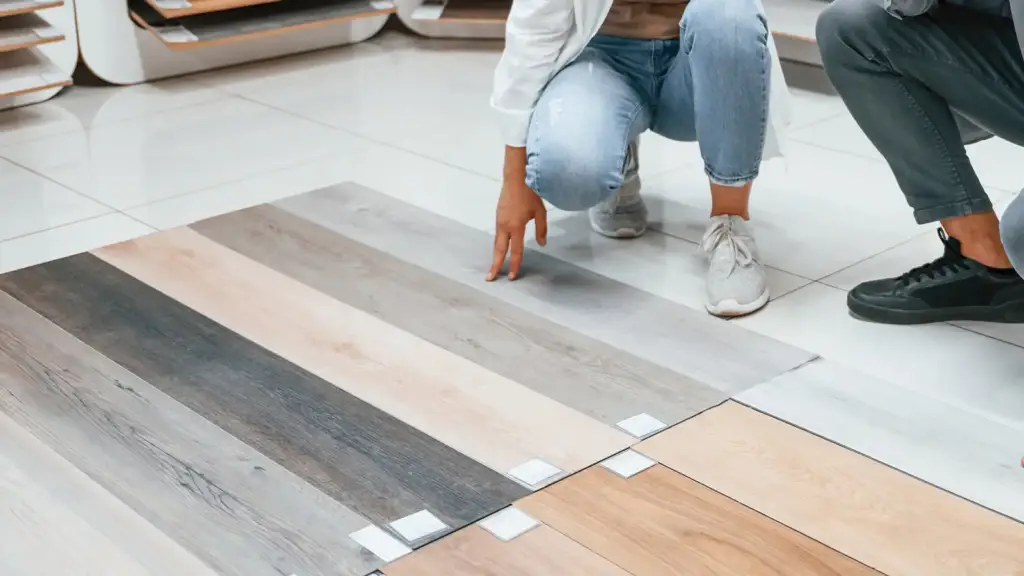
Glue down vinyl over tile is possible but fussier, because the adhesive has to bond to a glazed surface that was engineered to repel liquids. That normally means a full skim coat and a primer, at which point the labour saving that motivated the whole idea has evaporated.
Laminate is the weakest choice in this scenario. Kitchens and bathrooms are where the tile usually lives, and a laminate core sitting on a slab with unknown moisture history is a gamble that does not need taking.
When to Just Take the Tile Out
Choosing to install flooring over tile stops making sense in a few specific situations. Bathrooms with a floor drain or a sloped shower threshold, rooms where the tile sits on an uneven mortar bed, and any floor where the height gain would swallow a stair nosing all argue for removal.
Anyone planning vinyl plank over ceramic tile in a bathroom should think especially hard about it. Basement slabs deserve their own thought. If the tile was installed directly on concrete and there has ever been seepage, covering it traps whatever is underneath and hides the evidence. A moisture test on the slab, done properly with a calcium chloride kit or a relative humidity probe, answers that question for a few dollars.
A Reasonable Way to Decide
Tap the tile. Check that it is bonded. Straightedge the room in three directions. Measure the height clearance at the dishwasher, the fridge, and every exterior door. If all four of those come back clean, going over the tile is a genuinely good decision that saves days of mess and a real chunk of budget.
If any of them come back messy, the shortcut turns expensive. Installers at Petun Flooring and elsewhere in Ontario will usually tell a homeowner the same thing, that vinyl plank over ceramic tile succeeds or fails in the four hours of prep nobody wants to pay for, long before the first plank clicks into place.
Beige tile has waited this long. It can wait another afternoon while somebody fills the grout lines properly.
