

Anyone who has watched a Labrador take a corner at full speed on a brand new floor knows that sound, half skid and half panic. Choosing pet friendly flooring is less about hunting for something indestructible and more about knowing exactly where your animal will do the damage first, because every house has its own weak spot. Some floors die beside the water bowl. Others give up under the window where the cat sunbathes and digs.
The scale of this is bigger than most homeowners assume. Made in CA reported in early 2026 that roughly 39.5 percent of Canadian households live with a cat and 38.1 percent live with a dog, which means close to four in ten flooring quotes written in this country are for a home with an animal in it. Manufacturers noticed years ago. The product lines quietly shifted to match, and the marketing followed.
Start With the Damage, Not the Product
There are three separate enemies here and they almost never show up together. Scratching is mechanical. Moisture is chemical and slow. Denting is structural. A floor that shrugs off one of them can fold completely under another, so the honest first step is working out which one your household actually faces day to day. Good pet friendly flooring advice starts with the damage, not with the brochure.
Scratching and the claw problem
Dog nail scratches are the complaint that fills flooring showrooms every Saturday. They are rarely deep. They are surface level abrasions in the finish layer, which is why they show up as a dull grey haze in the hallway rather than gouges you can feel. Matte and wire brushed surfaces hide them so well that the same amount of wear reads as texture instead of damage.
Cats dig instead, concentrating pressure into a single point, which is why dog nail scratches and cat damage never look alike on the same floor.
Moisture, and the one accident nobody plans for
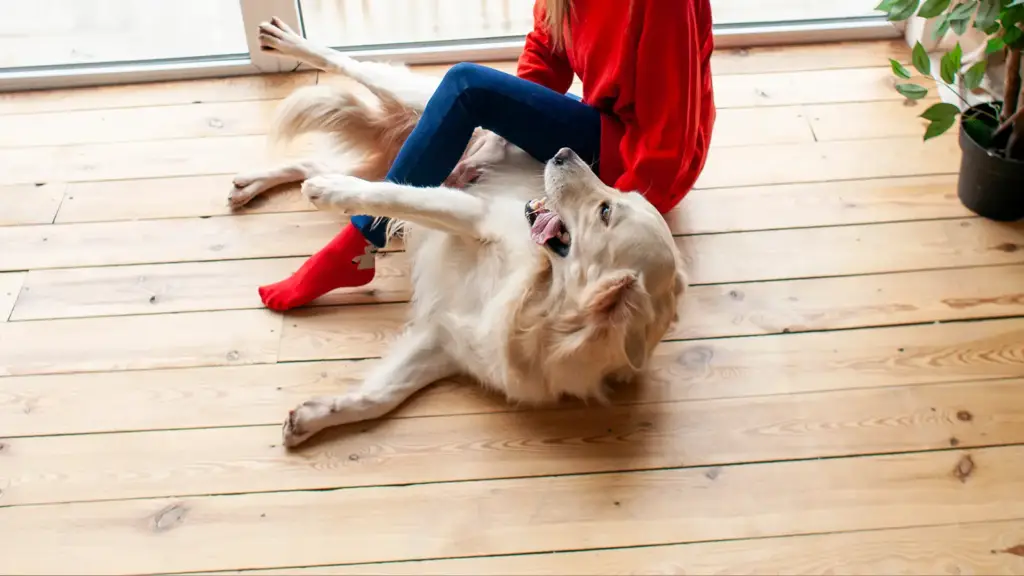
A puppy in training is not a one time event. It is months of small accidents, and the danger is not the liquid sitting on top of the floor. It is the liquid finding a seam. Pet urine damage hardwood cases almost always start at a board joint, travel into the subfloor, and announce themselves later as a dark stain and a smell that refuses to leave. By that point sanding will not fix it, because the problem is under the wood, not on it. This is the real reason pet friendly flooring conversations end up focused on seams rather than surfaces.
This is where waterproof flooring for pets earns its price. Rigid core vinyl and modern waterproof laminates are built so the core does not swell when water sits on a seam for an hour.
The Materials, Ranked Honestly
Rigid core vinyl
For most homes with a large dog, this is the practical winner. A scratch resistant vinyl plank with a thick wear layer handles claws, spills and the occasional dragged crate without drama. The number that matters is wear layer thickness, measured in mils. Twelve mil is entry level residential. Twenty mil and above is what commercial spaces use, and it is the sensible target when a dog over thirty kilograms lives in the house. That number is also where most pet friendly flooring warranties start to mean something.
Laminate
Laminate has the hardest surface of anything in this comparison, and that is not marketing. The laminate AC rating scale runs from AC1 to AC6, and AC4 or AC5 will out resist almost any vinyl on pure abrasion. The trade off is water. Older laminate cores swell permanently once moisture reaches them, and the swelling never goes back down. A laminate AC rating of AC5 shows up constantly in rental units for exactly that balance of hardness and price.
Engineered and solid hardwood
Hardwood is not off the table, it just asks for different expectations. A few notes from installers who repair these floors weekly:
- White oak and hard maple take claw traffic far better than walnut or birch.
- Matte and low sheen finishes hide wear that gloss would broadcast across a whole room.
- Engineered planks with a thicker top veneer can be refinished later, which is a real advantage over twelve years with an animal.
- Wood is also the only material here where pet urine damage hardwood repairs can occasionally be sanded out, provided the liquid never reached the subfloor underneath.
Cats, Dogs and the Room Nobody Thinks About
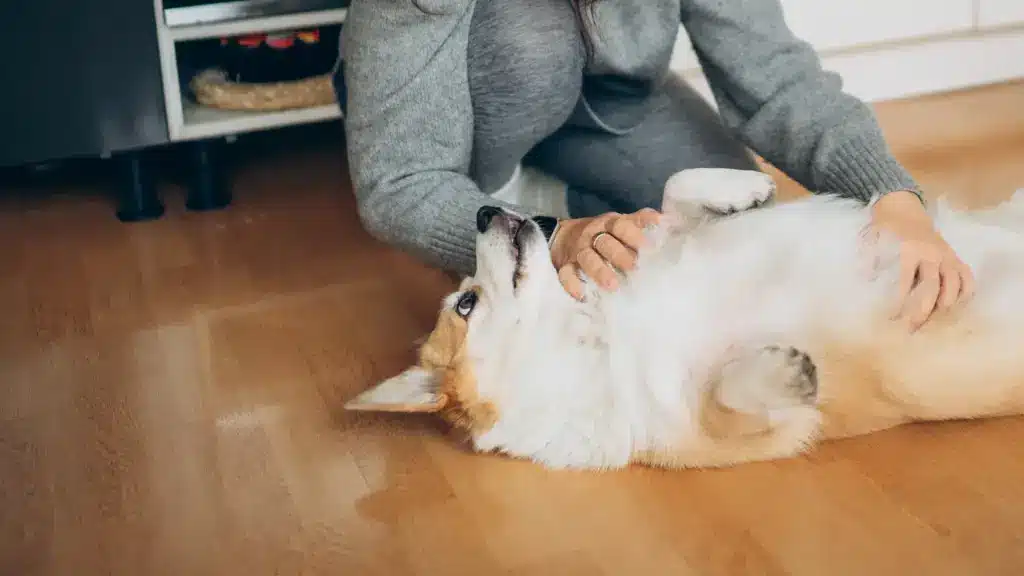
Search interest for the best flooring for dogs tends to focus on living rooms, which is odd, since the hallway and the entry take the most punishment. Every walk ends with wet paws at the same door. Salt from Ontario sidewalks rides in on fur between December and March and it is genuinely abrasive, grinding into the finish like fine sandpaper underfoot. Anyone comparing the best flooring for dogs should really be looking at the entry first and the living room second.
A washable runner across that first two metres protects a floor better than any upgrade in the plank itself, and it costs almost nothing.
What to Ask Before Signing a Quote
Warranty language is where the pet conversation gets quietly dishonest. Plenty of residential warranties exclude damage caused by animals outright, which makes an expensive scratch guarantee fairly meaningless in a home with two retrievers. Read the exclusions, not the headline.
Three questions worth asking the retailer:
- Does this warranty cover claw marks, or only manufacturing defects?
- What is the actual wear layer in mils, not the marketing name of the collection?
- Is the underlay rated for sound, or just for comfort, because a dog running at night carries through a condo floor.
Installed pricing for waterproof flooring for pets in Ontario generally lands somewhere between five and twelve dollars per square foot, and the wear layer moves that number more than the brand name does.
A Realistic Way to Decide
If the household has a large dog and a busy back door, waterproof rigid core with a twenty mil wear layer is the low regret choice. If the animals are small, mostly indoors and house trained, engineered hardwood in a matte finish gives the warmth that vinyl still cannot fake. A scratch resistant vinyl plank in a matte finish also hides the grey haze that a gloss surface would broadcast across a whole hallway.
Nails trimmed every three weeks prevent more damage than any feature printed on the box, and a mat under the water bowl stops the slow stain nobody notices until the bowl finally gets moved. Small, dull, unglamorous habits.
Pet friendly flooring is really a compromise between how a floor looks on day one and how it looks on day two thousand. The homes that get pet friendly flooring right are the ones that picked slightly less beautiful and slightly more forgiving, checked the wear layer thickness printed on the box, and then stopped worrying about it. A good pet friendly flooring choice should be forgettable, which is a strange compliment but an accurate one.
