

Beautiful flooring over a bad base is money thrown at a problem that will come back. Subfloor preparation for flooring is the least visible stage of any project and the one that decides whether the floor stays quiet, flat and locked together five winters from now.
Skipping subfloor preparation for flooring never shows up on day one, which is exactly why it keeps happening. Installers can tell within about ten minutes of walking into a room whether the job will go smoothly. Almost always, the answer is written into the floor underneath.
Subfloor Preparation for Flooring Starts With Flatness
Subfloor Flatness Tolerance
Every manufacturer publishes a number and almost nobody checks it. Typical subfloor flatness tolerance for click lock products is 3/16 of an inch over 10 feet, and some hardwood specifications are tighter still.
Use a long straightedge or a laser and mark the high and low spots with chalk. Failing subfloor flatness tolerance is the leading cause of hollow sounding spots and separated joints, and both of those are warranty exclusions rather than defects.
High spots get sanded or ground down. Low spots get filled.
Self Levelling Compound
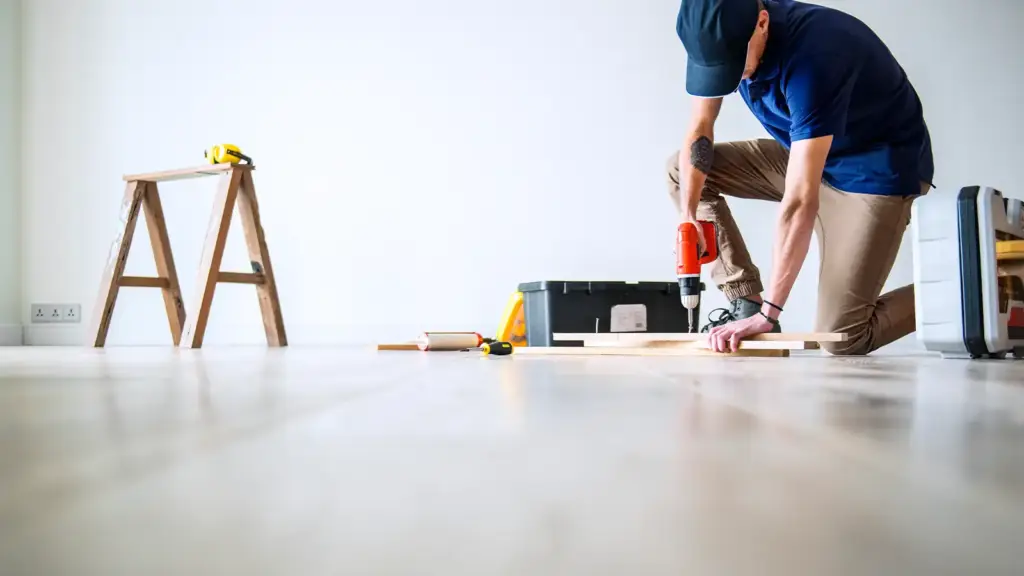
For dips and waves, self levelling compound is the standard fix. It pours out, flows into the low areas and cures into a flat, hard surface within hours.
Priming first is not optional, since compound poured onto bare porous concrete dries too fast and cracks. A good pour also needs the room sealed off, because it flows toward doorways with impressive enthusiasm.
Moisture Is the Quiet Killer
Concrete Moisture Test Methods
A concrete moisture test should happen on any slab, at any age, in any season. Slabs move vapour continuously, and a basement in Kitchener during a wet spring behaves very differently than the same slab in February.
Two methods dominate. Relative humidity probes drilled into the slab give the most reliable reading, while the surface based calcium chloride test measures vapour emission over a 72 hour period.
A calcium chloride test result above 3 pounds per 1000 square feet per 24 hours usually means a moisture mitigation product is required before installation. Skipping the concrete moisture test to save a few days is how adhesive failures and cupped planks start.
Basement Slab Moisture Realities
Basement slab moisture is a permanent condition rather than a temporary problem in most Ontario homes, especially older builds without a vapour barrier under the concrete.
Signs to look for include efflorescence, that white powdery bloom on the surface, and dark patches that never fully dry. Managing basement slab moisture usually means a vapour barrier, a moisture tolerant flooring type, and honest expectations rather than a miracle product.
Wood Subfloors Have Their Own Issues
Plywood Subfloor Squeaks
That familiar creak is movement between the panel and the joist. Plywood subfloor squeaks get fixed by driving screws through the panel into the joists, ideally before any new floor goes down.
Once the finished floor is installed, fixing plywood subfloor squeaks means pulling material back up. Ten minutes with a screw gun beforehand saves a very annoying conversation later.
- Walk the entire floor slowly and mark every squeak with tape before starting.
- Screw rather than nail, since nails work loose again over a few seasons.
Subfloor Thickness Requirements
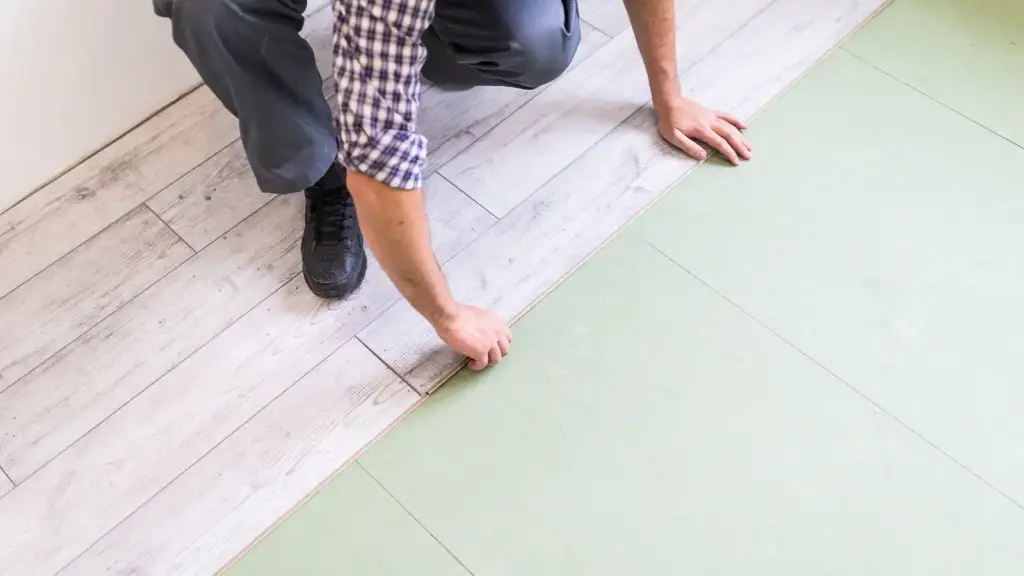
Bounce is another giveaway. Subfloor thickness requirements vary by product, though 5/8 inch plywood over joists at 16 inches on centre is a common minimum, with 3/4 inch preferred for hardwood and tile.
Thin or damaged panels need replacing or overlaying. Meeting subfloor thickness requirements matters most under tile, where flex leads to cracked grout lines and eventually cracked tile.
Cleaning Is Part of Subfloor Preparation for Flooring Too
Every scrap of old adhesive, carpet staple and drywall compound blob has to come off. A single staple under a vinyl plank telegraphs through the surface as a visible bump within weeks.
Sweep, scrape, vacuum, then vacuum again. Installers who cut this step short create callbacks for themselves, usually within the first month while the homeowner is still noticing every detail.
Timing and Sequence
Do subfloor preparation for flooring before the material is delivered, not after. Grinding and levelling create dust, and dust settling on acclimating boxes of hardwood helps nobody.
Let the compound cure fully, usually 24 hours minimum, and confirm the moisture content of any patching material before covering it. Fresh patching products hold water of their own, and sealing that water under a vinyl plank simply moves the problem somewhere you cannot reach it.
A Realistic Order of Operations
Remove the old floor. Scrape and clean. Check flatness with a straightedge. Screw down squeaks. Test the slab for moisture. Level the low spots. Clean again. Then install.
That sequence looks tedious and it typically adds one day to a project. It is also the difference between a floor that behaves and one that generates a service call every spring.
Local Context Matters
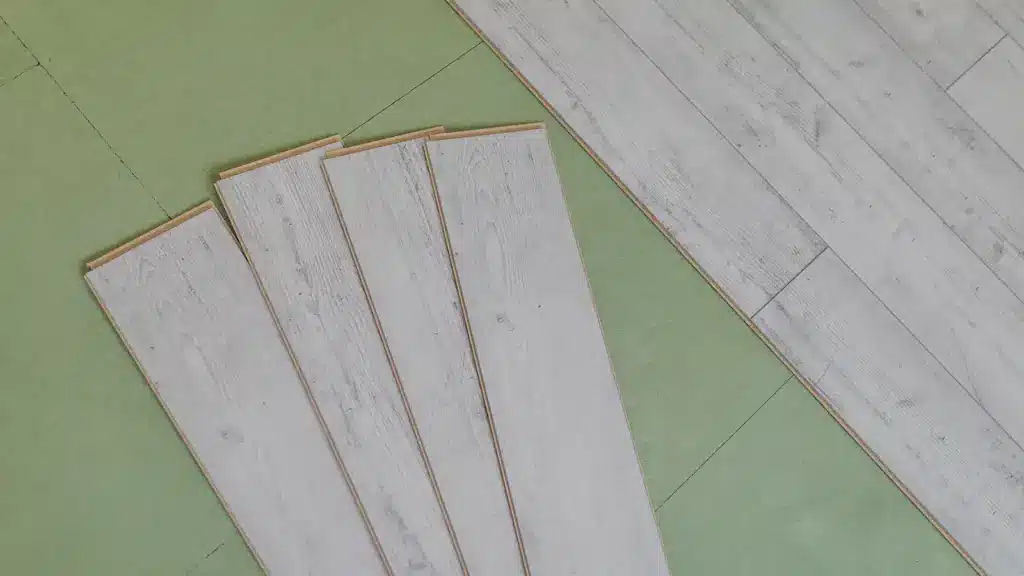
Homes across Kitchener, Waterloo, Cambridge and Guelph range from century properties with plank subfloors to new builds with slab on grade main levels. Each brings its own quirks, and a proper subfloor preparation for flooring assessment during a free in home measurement catches most of them early.
Older homes tend to have flatness problems, since decades of settling leave gentle waves that a straightedge finds immediately. Newer homes tend to have moisture problems instead, because a slab poured last season is still giving off vapour when the keys are handed over. Both are solvable when they are found before the boxes arrive, and both are expensive when they are found afterward.
The Bottom Line
Flat, dry, clean and solid, in that order. Those four words summarize every subfloor preparation for flooring standard published by every manufacturer, and meeting them costs far less than fixing a floor that failed because they were skipped.
Nobody ever compliments a subfloor. They just notice, years later, that the floor still looks new, and that quiet result is what proper subfloor preparation for flooring buys.
