

Nobody walks into a showroom excited about foam. Still, how to choose flooring underlay is one of the few decisions that quietly affects comfort, noise, moisture protection and whether your click lock joints survive winter in a Kitchener home.
The wrong underlay does not fail loudly. It just makes the floor feel hollow, or lets moisture creep up from a basement slab, and by then the planks are already down.
How to Choose Flooring Underlay: What It Actually Does
Four jobs, mostly. It smooths out small subfloor imperfections, it softens sound, it adds a little warmth underfoot, and in many cases it blocks moisture coming from below.
Not every product needs all four. A floating laminate in an upstairs bedroom has very different needs than a vinyl plank going over a concrete basement slab in Waterloo.
Start With the Subfloor
Underlay for Concrete Subfloor Installs
Concrete is never as dry as it looks. Underlay for concrete subfloor applications almost always needs a moisture barrier, because slabs release vapour continuously even years after they are poured.
Basements are the obvious case, though slab on grade main floors count too. Choosing underlay for concrete subfloor use without a barrier is how you end up with cupped planks and a mildew smell that nobody can trace.
Vapour Barrier Underlay Basics
A vapour barrier underlay is either a film built into the foam or a separate 6 mil polyethylene sheet laid first, with seams taped and edges run slightly up the wall.
Over plywood on an upper floor, a vapour barrier underlay is usually unnecessary and can actually trap moisture in the wrong direction. Over concrete, it is close to mandatory in Canadian basements.
Products That Come With Their Own
Attached Pad Vinyl Plank
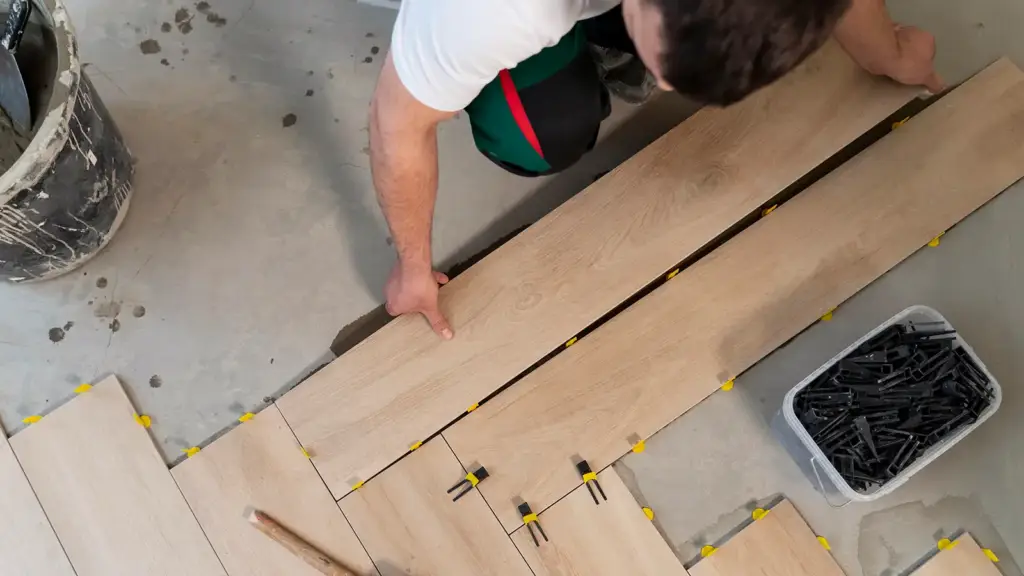
Most rigid core products now arrive with foam or cork already bonded to the back. Attached pad vinyl plank flooring is designed to sit directly on the subfloor without anything extra.
Adding a second layer under an attached pad vinyl plank is one of the most common mistakes in the industry. Too much cushion lets the planks flex, and flexing joints eventually separate, which most manufacturers list as a warranty exclusion in plain language.
If the product has a pad and the slab needs a barrier, use a thin film only, never another foam layer.
Thickness Is Not a Quality Score
Underlay Thickness mm Explained
Thicker feels better in the store and performs worse under a floating floor. Standard underlay thickness mm figures for laminate sit between 2 and 3 mm, and going past that reduces support rather than improving it.
Vinyl needs even less, typically 1 to 1.5 mm when underlay is permitted at all. Density matters more than underlay thickness mm, because a dense 2 mm product supports the locking system far better than a soft 4 mm one.
- Laminate, floating: 2 to 3 mm dense foam or fibre.
- Rigid core vinyl without attached pad: 1 to 1.5 mm, high density only.
Noise Control
Sound Rated Underlay Options
Condo owners across Kitchener, Waterloo and Cambridge run into this immediately. Sound rated underlay products carry IIC and STC numbers, and most condominium boards specify a minimum before approving a floor change.
IIC 60 to 65 is a common requirement, though some buildings ask for higher. A proper sound rated underlay in a rubber or high density fibre construction usually gets there, while a cheap foam sheet often will not, no matter what the packaging claims.
Keep the technical sheet. Property managers ask for it, sometimes months after the install.
Materials Worth Knowing
Cork Underlay Benefits
Cork sits at the premium end for good reason. Cork underlay benefits include natural sound absorption, resistance to mould, decent thermal value and a firmness that supports click systems well.
It costs more than foam and it does not include a moisture barrier on its own, so basement installs need film underneath. Among cork underlay benefits, the one installers appreciate most is that it does not compress and go soft after a few years of traffic.
Underpad for Laminate Specifically
An underpad for laminate floor needs to balance support with a bit of sound damping, since laminate is the loudest common floor covering underfoot.
Combination products with an attached film handle both jobs at once. When choosing an underpad for laminate over a wood subfloor, look for a density rating rather than a thickness number, because the marketing usually leads with the wrong figure.
What About Glue Down and Nail Down
Glue down vinyl and nail down hardwood do not use foam underlay at all. Glue down goes directly onto a prepared subfloor with adhesive, and nail down hardwood over wood subfloor uses building paper or a breathable membrane instead.
Mixing these up is expensive, since removing a glued floor that was installed over foam is a demolition job rather than a repair.
Radiant Heat Changes the Math
Homes with in floor heating need low thermal resistance, usually under 0.15 in R value terms. Thick foam and cork both insulate, which is exactly the opposite of what a radiant system wants.
Manufacturers publish these numbers, and the flooring team at Petun Flooring can match the underlay to both the heating system and the flooring warranty in one conversation.
A Short Decision Path
Concrete subfloor, product without attached pad: dense underlay with an integrated vapour barrier. Concrete subfloor, product with attached pad: 6 mil poly film only. Wood subfloor, laminate: 2 to 3 mm dense underpad, no barrier needed. Condo of any kind: sound rated product that meets the building requirement.
That covers the vast majority of homes in the region. Anything unusual, like an old plank subfloor or a converted garage, deserves a look before ordering.
One Last Thing
Anyone deciding how to choose flooring underlay should do one more check first. Read the flooring warranty before buying underlay, not after. Manufacturers name the underlay types they accept, and installing something outside that list can void coverage even if the floor performs perfectly.
Working out how to choose flooring underlay properly takes about ten minutes with a spec sheet, and it protects a purchase that should last fifteen years or more.
