

Quick answer: For most Ontario basements, the best flooring is waterproof rigid core (SPC) vinyl plank laid over a 6 mil vapour barrier or an insulated subfloor panel. It shrugs off concrete moisture, will not grow mould, feels warmer than tile and can be lifted and reused after a minor leak. Laminate, engineered hardwood and carpet can work too, but only when the slab passes a moisture test and the right subfloor goes down first.
A basement floor in Kitchener, Waterloo or anywhere else in Ontario sits on a concrete slab that stays cold all year and pushes moisture up from the ground. That is why the floor you pick for the main level is often the wrong choice downstairs. This guide compares every common basement flooring option, explains how to test and prepare the slab, and shows which material fits each type of basement room.
Basement Flooring Options Compared
Here is how the main options stack up for a below-grade room in an Ontario home:
| Flooring type | Handles moisture | Warmth underfoot | Best basement use | Watch out for |
|---|---|---|---|---|
| Rigid core (SPC) vinyl plank | Waterproof planks | Good with underlay | Rec rooms, offices, bedrooms, basement suites | Cheap planks with thin wear layers scratch fast |
| WPC vinyl plank | Waterproof planks | Very good, softer core | Kids play areas, home theatres | Dents more easily under heavy furniture |
| Laminate (water-resistant) | Resists spills, not flooding | Good with underlay | Dry, finished basements with no leak history | Swells if water sits at the seams |
| Engineered hardwood | Moderate, needs a dry slab | Good | Finished basements kept at steady humidity | Never install over a damp slab |
| Carpet or carpet tile | Poor if the slab gets wet | Excellent | Bedrooms and media rooms | Pad holds moisture and odours |
| Porcelain or ceramic tile | Excellent | Cold unless heated | Laundry rooms, bathrooms, walkouts | Hard and cold without radiant heat |
| Sheet vinyl or linoleum | Very good | Fair | Laundry and utility rooms | Shows slab bumps; needs a smooth floor |
If you are still deciding between the two most popular choices, read our side-by-side vinyl vs laminate for a Canadian basement guide. For basements with a history of water, our waterproof basement flooring guide for Ontario goes deeper on fully waterproof systems.
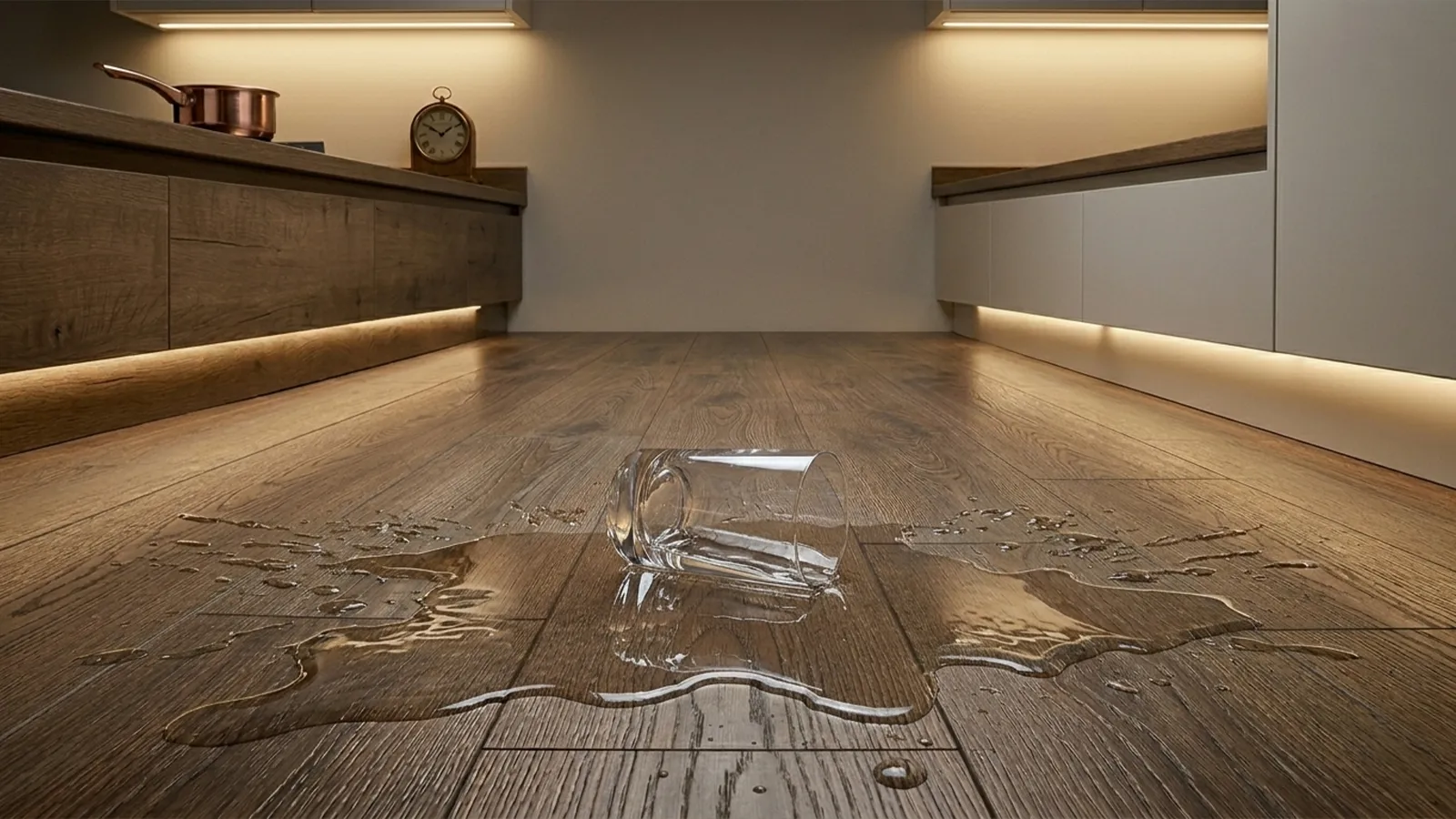
Step 1: Test the Concrete Before You Choose
The slab decides what you can install, so check it before you shop. A simple start is the plastic sheet test:
- Tape a 60 cm by 60 cm square of clear plastic tightly to the bare concrete.
- Leave it for 24 to 48 hours with the room at normal temperature.
- Check underneath. Droplets or a dark, damp patch mean moisture is coming up through the slab.
- Look for white, chalky deposits (efflorescence) along walls or cracks, which also point to moisture.
A damp result does not rule out a nice floor, but it does mean you should stick to waterproof vinyl or tile and add a proper vapour barrier or dimpled subfloor. Many manufacturers also ask for a professional moisture reading before their warranty applies, so keep the result on file.
Step 2: Pick a Subfloor Strategy
Most basement floor problems come from the layer nobody sees. There are three common approaches:
- Direct over concrete with a vapour barrier: a 6 mil poly sheet (or an underlay with a built-in barrier) under floating vinyl or laminate. Lowest cost and keeps the most headroom.
- Insulated subfloor panels: products such as the Barricade insulated subfloor panel add a thermal break and an air gap so the floor feels noticeably warmer. They raise the floor, so check door and stair clearances.
- Levelling first: rigid core planks need a flat slab. Dips and humps should be ground down or filled with self-levelling compound so the click joints do not flex and break.
Our guide to getting the subfloor right and our article on choosing the right underlay explain each layer in more detail.

Which Basement Flooring Fits Which Room?
Family room or rec room
Rigid core vinyl plank in a light oak or greige tone. It handles kids, pets and furniture, and light colours make a room with small windows feel brighter.
Home office or gym
SPC vinyl with a dense underlay for offices. For a home gym, use rubber mats over vinyl or choose a heavier commercial-grade plank so weights do not dent the floor.
Basement bedroom or guest suite
Carpet feels warmest, but only on a dry slab with a moisture barrier and a synthetic pad. If you want the soft feel with less risk, use vinyl plank with area rugs. See our carpet installation service if carpet is the plan.
Laundry room, bathroom or walkout entry
Porcelain tile or waterproof vinyl. Both handle standing water, salt and wet boots. Tile pairs well with in-floor heat; our radiant floor heating guide lists which floors are safe over heat.
Can hardwood go in a basement?
Solid hardwood should not go below grade. Engineered hardwood can, if the slab tests dry and the space is kept at steady humidity year round. Our engineered vs solid hardwood guide explains why.
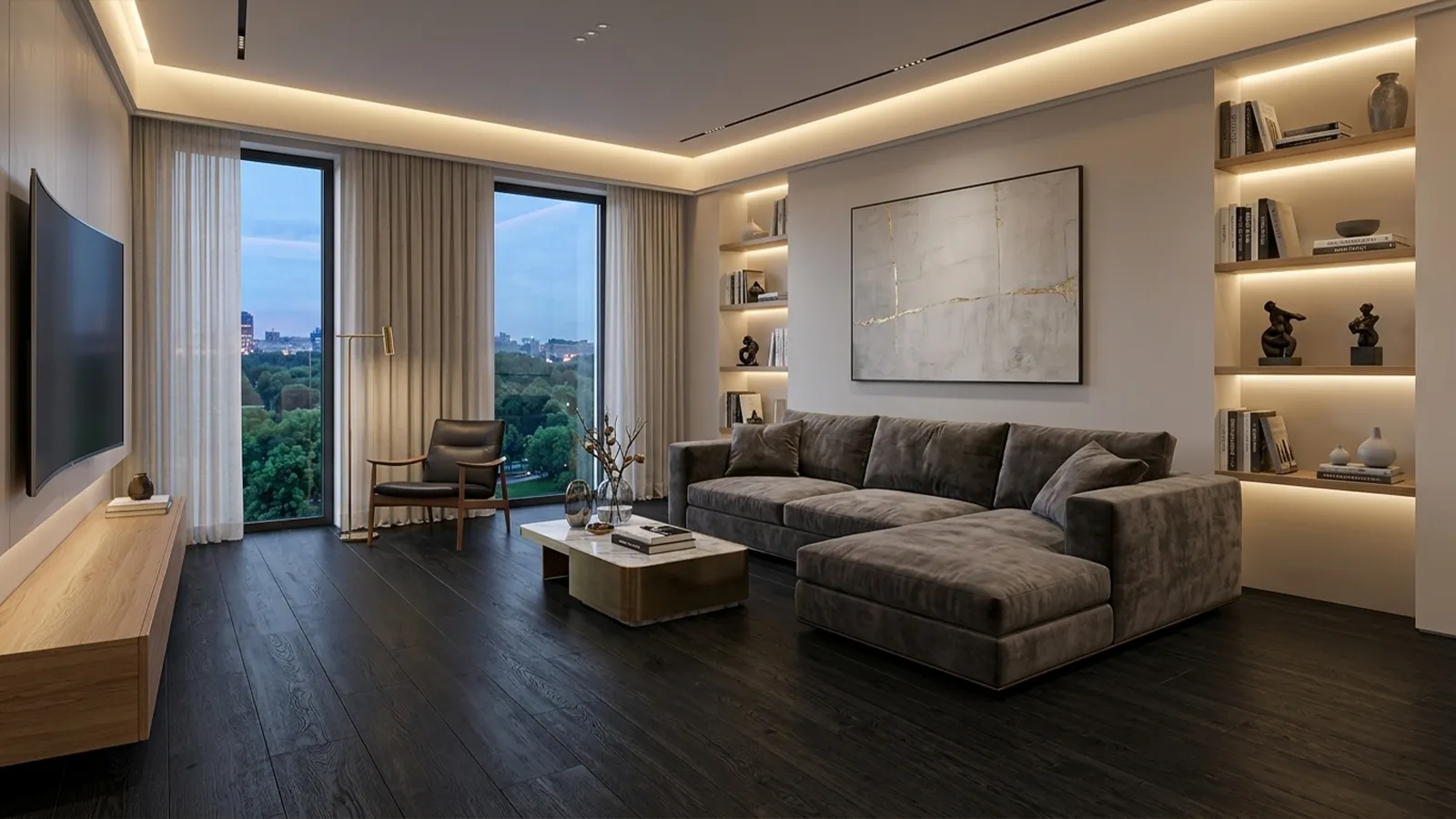
Common Basement Flooring Mistakes in Ontario Homes
- Skipping the moisture test because the basement “never floods”.
- Installing laminate in a basement with a sump pump or past leak history.
- Using a foam underlay with no vapour barrier directly on concrete.
- Ignoring slab flatness, which leads to clicking, gapping and broken locking joints.
- Choosing dark planks for a room with little natural light.
- Forgetting the 1 cm or so expansion gap at walls and posts for floating floors.
Budgeting for a Basement Floor
Total cost depends on the material, the subfloor system, levelling and stairs. Waterproof vinyl and laminate are usually the most affordable finished floors, while insulated panels, levelling and tile add to the job. For current price ranges by material, see our Ontario flooring cost guide.
Get Basement Flooring Advice in Kitchener-Waterloo
Petun Flooring helps homeowners across Kitchener, Waterloo, Cambridge and Guelph pick and install basement floors that last. Visit the showroom to compare SPC vinyl, laminate and subfloor panels side by side, book professional vinyl flooring installation, or request a free flooring estimate and we will measure and check your slab on site.
Basement Flooring FAQ
What is the best flooring for an Ontario basement?
For most basements, waterproof rigid core (SPC) vinyl plank over a vapour barrier or insulated subfloor panel is the best all-round choice. It is waterproof, mould resistant, durable and warmer underfoot than tile.
Do I need a vapour barrier under vinyl plank on concrete?
In most basements, yes. A 6 mil poly sheet or an underlay with a built-in vapour barrier stops slab moisture from collecting under the planks. Always follow the flooring manufacturer’s installation instructions.
Is laminate flooring OK in a basement?
Laminate can work in a dry, finished basement with no leak history, a vapour barrier and a water-resistant product. If the basement has ever taken on water, waterproof vinyl is the safer choice.
What is the warmest flooring for a basement?
Carpet feels warmest, but insulated subfloor panels under vinyl plank give a warm floor without the moisture risk of carpet pad. Radiant floor heat under tile or vinyl is the warmest option of all.
Can you put flooring directly on a basement concrete floor?
Floating vinyl and laminate can go over concrete once the slab is clean, flat and dry, with a vapour barrier or barrier underlay. Glue-down floors need the slab to meet the adhesive maker’s moisture limits.
